

Short Introduction to Sichuan Local Culture: History, Nation, Diet, Ethnic, Cuture, etc.
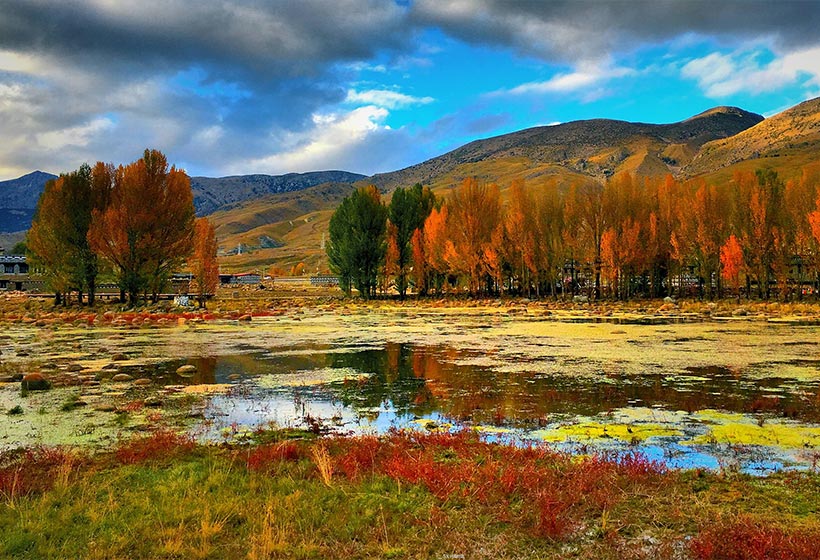
Sichuan, abbreviated as Chuan or Shu, is located in southwestern China, with Chengdu as its provincial capital. Covering approximately 486,000 square kilometers, it is the fifth-largest province in China by area, with a permanent population of around 83.75 million. The province borders Chongqing, Yunnan, Guizhou, Shaanxi, Gansu, Qinghai, and Tibet. Its terrain slopes from west to east and is divided into three major geographical regions: the Sichuan Basin, the northwestern Sichuan Plateau, and the mountainous areas of southwestern Sichuan.
Sichuan features a diverse climate, ranging from humid subtropical monsoon conditions to alpine and plateau climates. It is also the main habitat of the giant panda, home to approximately 74.4% of China's wild giant panda population. The province is renowned for its distinctive cultural traditions, including Sichuan Opera, Shu brocade, and Sichuan shadow puppetry, as well as its famous Sichuan cuisine and hot pot. Its natural and cultural attractions include UNESCO World Heritage Sites such as Jiuzhaigou Valley, Huanglong, and the Sichuan Giant Panda Sanctuaries, along with renowned destinations like Mount Emei and the Leshan Giant Buddha, and Mount Qingcheng and the Dujiangyan Irrigation System.
Brief History
The name "Sichuan" dates back to the Northern Song Dynasty. In 1001, the imperial court divided the original Chuanxia Circuit into four administrative regions: Yizhou, Zizhou, Lizhou, and Kuizhou, collectively known as the "Four Circuits of Chuanxia," or simply the "Four Sichuan Circuits." This marked the earliest use of the name Sichuan.
Historically known as Bashu, Sichuan is home to the ancient Shu civilization and is closely associated with the origins of Taoism in China. It is also where Jiaozi, the world's earliest paper currency, first appeared. The Sanxingdui and Jinsha archaeological sites offer remarkable insights into the ancient Shu civilization. Excavations at Sanxingdui in Guanghan have uncovered bronze sacred trees, gold masks, and other artifacts revealing a mysterious belief system dating back approximately 4,800 to 2,600 years. At the Jinsha Site in Chengdu, the famous Gold Sun Bird ornament reflects the prosperity and sophistication of the ancient Shu capital. Thanks to its fertile land and abundant resources, Sichuan has long been celebrated as the "Land of Abundance."
During the final dynasty of the ancient Shu Kingdom, the capital was moved to Chengdu, laying the foundations for the city's development. In 316 BC, the Qin state conquered the kingdoms of Ba and Shu and established Ba and Shu commanderies. The renowned engineer Li Bing subsequently oversaw the construction of the Dujiangyan Irrigation System, transforming the Chengdu Plain into one of China's most fertile agricultural regions and earning it the name "Land of Abundance." The introduction of iron tools and ox-drawn plowing further boosted agricultural production and economic growth.
Toward the end of the Eastern Han Dynasty, Liu Bei established the Shu Han regime in Chengdu, making it one of the Three Kingdoms alongside Wei and Wu.
During the Tang Dynasty, Chengdu, then known as Yizhou, became the country's second-largest commercial and industrial city. Shu brocade, papermaking, and woodblock printing were particularly advanced and renowned throughout China. Mount Qingcheng became an important center of Taoism, while Mount Emei flourished as a major center of Buddhism, giving Sichuan two prominent centers of religious culture.
In 1281, during the Yuan Dynasty, the Sichuan Branch Secretariat was established, laying the foundation for Sichuan's provincial-level administrative structure. The Ming Dynasty maintained the provincial system, with Sichuan becoming one of the empire's 13 provincial administrative divisions. During the Qing Dynasty, Sichuan was formally established as a province, and its southern boundary took shape largely as it exists today. Chengdu remained the provincial capital.
During the Republican era (1912–1949), Sichuan underwent several administrative reorganizations. In 1935, a new Sichuan provincial government was established, bringing the province under unified administration. In 1939, Chongqing was separated from Sichuan and became a municipality under the central government.
Sichuan was liberated in 1949, and on August 7, 1952, the Central People's Government officially decided to re-establish Sichuan Province.
In 1997, Chongqing became a municipality directly under the central government, separating administratively from Sichuan and establishing the provincial boundaries of present-day Sichuan.
Region Culture
Sichuan's regional culture is rooted in Bashu culture, a unique cultural tradition that developed through the long-term blending of the ancient Ba and Shu cultures, centered around the Sichuan Basin. With a history stretching back to the ancient Shu civilization, Bashu culture has continued to evolve over thousands of years. It encompasses both the mysterious and remarkable bronze civilization represented by the Sanxingdui and Jinsha archaeological sites and vibrant traditions that remain part of everyday life today, such as Sichuan cuisine, Sichuan opera, and Shu brocade.
Since ancient times, Sichuan has been a place where different ethnic groups have met and mingled. Bashu culture is known for its openness and diversity, embracing Confucianism, Buddhism, and Taoism, as well as cultural influences brought by migrants from different regions. The region has also made important contributions in fields such as bronze casting, hydraulic engineering, papermaking, well-salt production, and the ancient Tea Horse Trade, enriching Chinese civilization through its continuity, inclusiveness, and spirit of innovation.
Mahjong Culture
Sichuan is famous throughout China for its people's love of mahjong. As a traditional Chinese tile-based game, mahjong is not only a form of entertainment but also carries deep cultural significance. In Sichuan, few things are more enjoyable than escaping the hustle and bustle of daily life and spending a leisurely afternoon playing mahjong with friends.
Giant Panda Culture
Sichuan is one of the world's most important habitats for giant pandas. The giant panda is not only an iconic symbol of Sichuan's tourism industry but also China's national treasure. The province has developed a wide range of panda-themed products and cultural activities, making panda culture an important part of its natural heritage. The giant panda symbolizes peace, unity, and harmony between humans and nature.
Teahouse Culture
Teahouses are a familiar sight throughout Sichuan, especially in parks and historic cultural districts. In addition to enjoying tea, visitors can sometimes watch traditional tea-making demonstrations, Sichuan opera, and other folk performances. Chengdu alone is home to thousands of teahouses. Traditional teahouses still retain their bamboo chairs, lidded tea bowls (gaiwan), and old-fashioned wood-fired stoves. Drinking tea is more than just a daily habit; it is an important way for locals to socialize, relax, and enjoy life, reflecting the warm and sociable character of Sichuan people.
Sichuan Liquor Culture
With its long history and favorable natural conditions for brewing, Sichuan is home to many renowned Chinese liquor brands. Among the best known are Wuliangye, Luzhou Laojiao, and Shede. Particularly noteworthy is Shuijingfang, home to a distillery site recognized as one of the oldest well-preserved traditional liquor workshops in the world. Dating back to the Yuan Dynasty, the site offers a glimpse into centuries-old Chinese baijiu-making techniques and has been recognized by Guinness World Records. Today, Sichuan's liquor-making traditions remain an important part of its cultural heritage, reflecting the region's craftsmanship and long-standing drinking culture.
Language
Chinese dialects spoken in Sichuan Province fall into three main groups. The first and most widespread is Southwestern Mandarin, commonly known as Sichuanese or Sichuan Mandarin. The other two are Hakka and Xiang, both spoken in certain parts of the province.
Ethnic
Sichuan is home to many ethnic groups, including the Han, Tibetan, Qiang, Yi, Miao, Zhuang, and Hui peoples. Their long history of living together and cultural exchange has created a diverse and vibrant cultural landscape. Sichuan is home to China's largest Yi community, the country's second-largest Tibetan community, and the only major settlement of the Qiang people.
Yi People: The Liangshan Yi Autonomous Prefecture in southern Sichuan is home to China's largest Yi community. Traditional Yi clothing is mainly made of wool and hemp, with blue and dark blue as its dominant colors. The Yi people are also known for their distinctive wooden-tile houses. The Torch Festival is their most important and representative traditional celebration.
Tibetan People: Sichuan has a Tibetan population of over one million, making it home to China's second-largest Tibetan community. They mainly live in Garze and Aba Tibetan Autonomous Prefectures, as well as Muli County in Liangshan. The main groups include the Kham, Jiarong, and Baima Tibetans. Located at the transition between Tibetan and Han Chinese regions, as well as between pastoral and farming areas, Sichuan's Tibetan communities share many features of wider Tibetan culture while retaining a distinctive western Sichuan character.
Qiang People: The Qiang people mainly live in Maoxian, Wenchuan, and Lixian counties in Aba Prefecture, as well as Beichuan Qiang Autonomous County. Their villages are often built along mountain slopes and are known for their stone watchtowers and stone houses. Traditional clothing includes long, right-over-left-front robes, often worn with sheepskin jackets and headscarves. Qiang women are especially known for their silver ornaments and fine embroidery. One distinctive detail is the upturned toes of their shoes, often embroidered with cloud patterns.
Traditional Festival
Yi Torch Festival: Held on the 24th day of the sixth lunar month, the festival features fire-worship ceremonies, bonfires, horse racing, bullfighting, and the traditional Duoluohuo dance. These activities symbolize driving away evil and praying for peace and good fortune.
Qiang New Year: Celebrated on the first day of the tenth lunar month, this important festival brings together religious ceremonies, singing, dancing, and feasting to celebrate the harvest and pray for peace. It is included on UNESCO's Representative List of the Intangible Cultural Heritage of Humanity.
Tibetan Customs: Traditional customs include presenting khata (ceremonial scarves), pilgrimage around sacred mountains, and performing Guozhuang circle dances. The Kangding Mountain Pilgrimage Festival, held on the eighth day of the fourth lunar month, is a notable local celebration.
Chengdu Lantern Festival (15th day of the Lunar New Year): The Chengdu Lantern Festival is a vibrant traditional event that has evolved from the centuries-old custom of appreciating lanterns during the Lantern Festival. Lasting for a full month, the celebration fills local parks with dazzling lantern displays, lively folk performances, acrobatics, and an array of delicious street food. It’s a festive spectacle that brings together culture, artistry, and the joyful spirit of the Spring Festival.
Huazhao Festival (Flower Festival) :Celebrated on the 2nd, 12th, or 15th day of the second lunar month, the Huazhao Festival dates back to the Spring and Autumn Period and originated from ancient nature worship and legends of the Flower Goddess, Lady Yi. Traditional festivities include offering sacrifices to the Flower Goddess, spring outings to admire blooming flowers, and enjoying flower-shaped cakes. These customs reflect deep reverence for nature and a longing for beauty and harmony in life.
Great River Outing (Dayoujiang): Every year on the 19th day of the fourth lunar month, locals in Chengdu gather at Huanhua Creek to take part in the traditional “Great River Outing”. People enjoy boating on the creek, admiring the scenic beauty, or paying tribute to Lady Huanhua. Originating in the Tang Dynasty, this unique folk custom reflects Chengdu’s rich cultural heritage and deep connection to nature.
Spring Festival Customs: During the Spring Festival, traditional customs like “beating the spring ox” were once popular in both Chengdu and Huayang. This ritual, held during the spring plowing ceremony, symbolized hopes for favorable weather and a bountiful harvest in the coming year. Another vibrant tradition is the Dragon Dance, also known as "playing with the dragon lantern." With over 2,000 years of history, it was already widespread during the Han Dynasty. In ancient times, communities performed the dragon dance to seek blessings from the dragon for good weather and abundant crops.
Dujiangyan Water Releasing Festival ( Qingming Festival 4th April ): As the lifeline of the Chengdu Plain, the Dujiangyan Irrigation System plays a vital role in local agriculture. Each year, before the spring plowing season, the Water Releasing Festival is held and regarded as a sacred event by the local community. The celebration features a reenactment of ancient sacrificial rituals, with officials dressed in traditional costumes reading ceremonial texts to honor the legendary hydraulic engineers, Li Bing and his son. The ceremony culminates in the symbolic release of water, paying tribute to their enduring legacy and ushering in a season of abundance.
Diet Style and Culinary Tastes
Sichuan cuisine, one of China's Eight Great Culinary Traditions, is famous for its distinctive seasonings and bold, spicy flavors, especially the signature numbing and spicy taste. It brings together culinary influences from different parts of Sichuan, blending traditional Central Chinese cooking with local southwestern flavors to create a rich and diverse range of dishes. Hot pot, a signature dish of Sichuan cuisine, also has a rich cultural heritage. In Sichuan, hot pot is more than just food; it is a way of life for local people.
Representative Sichuan dishes include fish-fragrant shredded pork, Kung Pao chicken, Sichuan-style poached pork slices, and Leshan sweet-skinned duck.
Read More Local Food-Restaurants in Sichuan »
Cultural Heritage
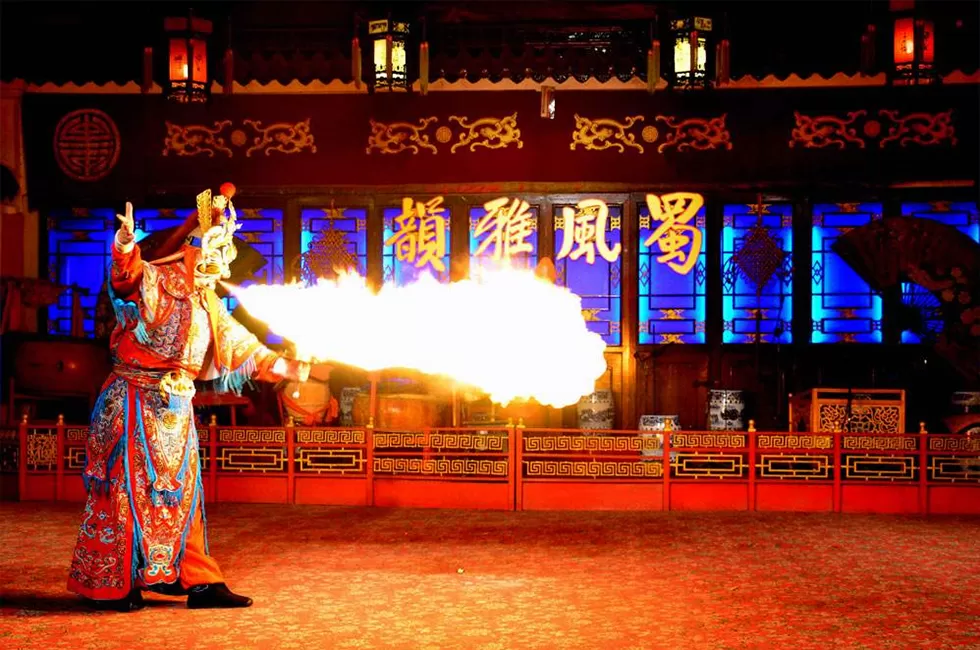
Sichuan boasts a rich cultural heritage, with 5 UNESCO World Heritage Sites, 9 elements inscribed on UNESCO’s Representative List of the Intangible Cultural Heritage of Humanity, and numerous nationally protected cultural heritage items. Its most iconic cultural and natural landmarks include the Dujiangyan Irrigation System, the Leshan Giant Buddha, Jiuzhaigou Valley, Huanglong, and the Sichuan Giant Panda Sanctuaries. The province is also known for its distinctive traditional arts, particularly Sichuan Opera and its dramatic face-changing (bian lian), as well as the exquisite Golden Sunbird ornament.
Sichuan Opera is one of the province’s most treasured cultural traditions, with roots dating back to the Tang Dynasty, when Sichuan opera was already praised as being among the finest in China. Its most celebrated performance technique is undoubtedly face-changing, in which performers change their masks in the blink of an eye, creating a spectacular highlight of the show.
Customize Your Unique Sichuan Tour

If you are interested in one of the Sichuan itineraries mentioned above, please contact us, and we will be happy to customize it and provide a quote tailored to your preferences.
Alternatively, if you would like to customize your Sichuan Tour, please visit our Sichuan Tour Customized Center. We assure you that you will receive a reply within 24 working hours.
Informative Articles for Your Sichuan Trip
 Sichuan
- Travel Guide: attractions, seasons, hotels, food, itineraries, etc.
- Top attractions: well-selected top attractions in Sichuan
- Top destinations: places to visit in Sichuan
- Travel itineraries: best itineraries for your reference
- Weather: the best time and seasons to visit Sichuan
- Sichuan Culture: rich and unique
- Abundant activities:hands-on activities to spotlight your trip
- Unique perspective: top different things to do
- Local food: what to eat while traveling in Sichuan
- Luxury hotels: where to stay in Sichuan
- Sichuan Tours: tailor-made Sichuan Tours for your reference


GREAT FAMILY CHINA TOUR
JULY 2024 We wanted to thank Grace at China Culture tour for organizing a great tour of China. We enjoyed our Beijing - Xian-Chengdu -Guilin -Yangshuo - Shanghai trip. Our local guides Bruce in Beijing, Susan in Xian, Jane in Chengdu, Mike in Guilin and Mary in Shanghai took care of us…read more details »
Teng Han L from SINGAPORE
Ready to Create a Unique Dream Travel?