


Jiangsu Travel Guide: attractions, itinerary, hotels, food...
Jiangsu, abbreviated as “Su,” takes its name from the first characters of Jiangning and Suzhou, two historic prefectures. Located in eastern China, Jiangsu borders the Yellow Sea to the east, Shandong to the north, Anhui to the west, and Shanghai and Zhejiang to the southeast. The Yangtze River runs across the province from west to east, while the Beijing-Hangzhou Grand Canal runs from north to south.
Blending cultural influences from both northern and southern China, Jiangsu is one of the birthplaces of ancient Chinese civilization, known for its beautiful natural landscapes and rich cultural heritage. Nanjing, the celebrated capital of the Six Dynasties, is renowned for its Nanjing Yunjin brocade. Classical gardens such as the Humble Administrator’s Garden and the Lingering Garden showcase the elegance of traditional Chinese architecture and landscape design. The province’s scenery ranges from the vast waters of Taihu Lake and Hongze Lake to the delicate beauty of Slender West Lake. Jiangsu is also famous for its distinctive local cuisine, offering travelers plenty of opportunities to discover the region through its food.
Welcome to Jiangsu for a unique and memorable travel experience!
- Chinese name: 江苏 / Jiangsu
- Area: 107,200 square kilometers
- Population: 85.18 million as of 2025
- Capital: the capital and largest city is Nanjing
- History: It is also home to 13 National Historical and Cultural Cities.
- Famous for: Garden, silk industry, clay pot and Suzhou embroidery, Nanjing Yunjin brocade
Brief History
Human activity in Jiangsu can be traced back more than 350,000 years, as evidenced by the discovery of Homo erectus fossils at Tangshan in Nanjing. At the end of the Shang dynasty, Taibo and Zhongyong migrated south and established the ancient state of Gouwu, laying the foundations of Wu culture. During the Three Kingdoms, Eastern Jin, and Southern Dynasties, Nanjing served as the capital of Eastern Wu, Eastern Jin, and the Southern Dynasties of Song, Qi, Liang, and Chen, making Jiangsu an important political, economic, and cultural center in southern China. After the Grand Canal was completed during the Sui and Tang dynasties, Yangzhou became a major transportation hub for grain shipments and grew into an important economic and cultural center in China.
Under the Yuan dynasty, the region was divided between the Jiangzhe and Henan Jiangbei provinces. During the Ming dynasty, Jiangsu was incorporated into Nanzhili and came under the administration of the central Six Ministries. In 1667, the sixth year of the reign of the Kangxi Emperor of the Qing dynasty, Jiangsu was formally established as a province. Suzhou became an important economic and cultural center in Jiangnan thanks to its thriving silk industry and commerce, while its classical garden art reached its peak. Yangzhou flourished through the salt trade and Grand Canal commerce, giving rise to a distinctive salt merchant culture and garden tradition. Nanjing continued to develop as an important political, cultural, and commercial center.
In 1912, the Provisional Government of the Republic of China was established in Nanjing, with Sun Yat-sen serving as the provisional president. In 1937, Nanjing witnessed the Nanjing Massacre, one of the most tragic events in China's modern history. In January 1953, Jiangsu Province was formally reestablished, with Nanjing designated as its provincial capital.
Why Jiangsu
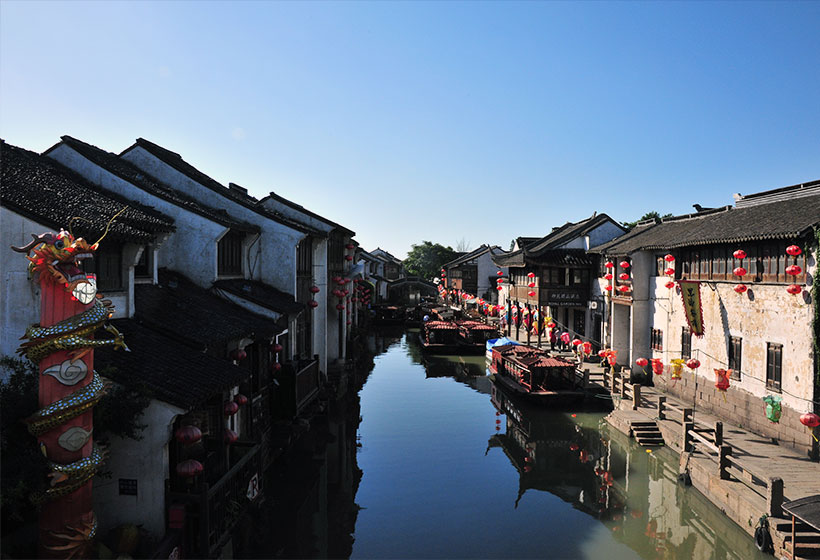
Traveling to Jiangsu offers a chance to experience the essence of Jiangnan, where beautiful water-town scenery, ancient cities, and centuries-old traditions come together. Visit the classical gardens of Suzhou, UNESCO World Heritage sites that showcase the artistry of traditional Chinese landscape design, and discover the province's rich history and cultural heritage.
The Grand Canal runs through the province, connecting historic cities such as Yangzhou and Wuxi. Jiangsu is also rich in intangible cultural heritage, including Suzhou embroidery, Kesi silk tapestry, Kunqu Opera, Yixing purple clay teapots, and Huishan clay figurines. Many local workshops welcome visitors to try their hand at these traditional crafts, offering a more personal way to experience Jiangsu's culture.
Traveling to Jiangsu provides a unique opportunity to discover a lesser-known part of China, immerse oneself in the region's culture and history, and enjoy its natural beauty and cuisine.
Attractions, what to visit
For many travelers, Jiangsu is one of China’s most rewarding destinations, attracting visitors with its classical gardens, historic cities, scenic waterways, and rich cultural heritage. Many come to explore the elegant gardens of Suzhou, stroll along the Qinhuai River and visit Confucius Temple in Nanjing, or enjoy the beautiful scenery of Slender West Lake in Yangzhou.
However, Jiangsu is more than just a destination for gardens and ancient towns. The province also offers the historic Grand Canal, beautiful Taihu Lake, Buddhist landmarks such as Jinshan Temple and Lingshan Grand Buddha, and a wealth of traditional architecture and cultural heritage. Suzhou’s classical gardens, Nanjing’s Sun Yat-sen Mausoleum, Wuxi’s Lingshan Scenic Area, and other natural and cultural attractions reveal the diverse character of Jiangsu.
Food and restaurants, what and where to eat
Jiangsu cuisine is renowned for its fresh, delicate flavors, refined knife skills, and precise cooking techniques. It emphasizes the natural flavors of the ingredients and is particularly known for slow-cooking methods such as stewing, braising, and simmering. Jiangsu cuisine is traditionally divided into four major regional styles: Huaiyang, Jinling, Suzhou-Wuxi, and Xuhai, with Huaiyang cuisine regarded as its core representative. Signature dishes include Braised Lion’s Head Meatballs, Braised Shredded Dried Tofu, Yangcheng Lake Hairy Crab, Sweet and Sour Mandarin Fish, Nanjing Salted Duck, and Yangzhou Fried Rice, among many others.
Weather, the best time to visit Jiangsu
Jiangsu generally enjoys four distinct seasons, with spring and autumn being the best times to visit. September to October is particularly favorable, with milder temperatures, lower humidity, and often clear, crisp skies, making it ideal for outdoor sightseeing.
Spring is also a beautiful time to explore Jiangsu, when gardens are filled with fresh greenery and colorful blooms. The misty rain of Jiangnan adds a poetic, ink-wash quality to the scenery, creating an especially atmospheric experience.
Top Popular destinations, where to visit
Where are the best places to explore classical gardens and Jiangnan culture in China? Of course, it’s Jiangsu! Located in eastern China, Jiangsu is one of the best places to experience the charm of Jiangnan, famous for its classical gardens, ancient water towns, historic cities, and rich cultural heritage. Each city offers its own unique take on Jiangnan culture.
Among them, several cities stand out for their distinctive Jiangnan charm. Suzhou is the heart of Jiangnan Garden culture, famous for its classical gardens, historic canals, and elegant water towns. Nanjing combines the grandeur of an ancient capital with rich imperial and Republican-era heritage. Yangzhou is renowned for its graceful gardens, Slender West Lake, Grand Canal heritage, and refined Huaiyang cuisine, while Wuxi is known for its beautiful Taihu Lake scenery, traditional waterways, and the magnificent Lingshan Grand Buddha.
Top things to do in Jiangsu
If you're looking for things to do in Jiangsu, top activities include exploring the classical gardens of Suzhou, cruising through Suzhou’s historic canals, visiting the Confucius Temple and Qinhuai Scenic Area in Nanjing, paying your respects at Sun Yat-sen Mausoleum, enjoying the beautiful scenery of Slender West Lake in Yangzhou, taking a boat ride on Taihu Lake, admiring the Lingshan Grand Buddha in Wuxi, exploring the historic Jinshan Temple in Zhenjiang, experiencing the charm of traditional Jiangnan water towns such as Zhouzhuang and Tongli, and tasting the rich flavors of Jiangsu cuisine.
Interesting hands-on activities to experience
In addition to its classical gardens and beautiful Jiangnan landscapes, cultural activities are an essential part of a trip to Jiangsu. Visitors can take part in hands-on experiences such as Suzhou embroidery, Yixing purple clay teapot making, Huishan clay figurine making, and Nanjing velvet flower making, or enjoy Kunqu Opera and traditional tea culture. From exploring ancient capital heritage and historic water towns to learning traditional crafts and experiencing local traditions, Jiangsu offers a rich variety of cultural activities that bring its history and traditions to life.
Where to stay in Jiangsu, hotels and boutiques.
Whether you wish to stay in the heart of Suzhou to explore its classical gardens and historic waterways, experience the charm of traditional Jiangnan architecture in ancient water towns such as Zhouzhuang and Tongli, or enjoy the comfort of luxury hotels in the city centers of Nanjing, Yangzhou, and Wuxi, Jiangsu offers accommodation for every type of traveler. These carefully selected hotels provide convenient bases for exploring Jiangsu’s beautiful landscapes, rich cultural heritage, and historic attractions.
The Garden Hotel Nanyuan: The Garden Hotel Nanyuan is located on Shiquan Street, one of Suzhou’s most famous cultural and tourist streets, just across the road from the Master of the Nets Garden.
Suzhou Four Seasons Hotel: Situated on a private resort island, the Four Seasons Suzhou is a luxury retreat offering first-class lakefront views and the serene beauty of lush greenery and sparkling waters.
Jinling Hotel Nanjing: Jinling Hotel Nanjing is one of Nanjing’s iconic landmarks and has witnessed the city’s transformation over the decades. Located on Hanzhong Road in Gulou District, the hotel is surrounded by a wide range of shops, restaurants, and other amenities.
Itineraries, how to plan a Jiangsu trip
A trip to Jiangsu could include exploring the classical gardens and historic waterways of Suzhou, visiting the ancient capital heritage and historic landmarks of Nanjing, enjoying the elegant scenery of Slender West Lake in Yangzhou, experiencing the charm of traditional Jiangnan water towns such as Zhouzhuang and Tongli, admiring the beautiful landscapes of Taihu Lake in Wuxi, and discovering the province’s rich cultural heritage through traditional crafts, cuisine, and local traditions.
Day 1: Arrive in Suzhou, explore Pingjiang Road, take a canal boat ride to see the old city from the water and enjoy the atmosphere of Suzhou at night.
Day 2: Visit Humble Administrator’s Garden. Explore Tongli Water Town, take a traditional black-awning boat ride through the canals, then walk through the narrow lanes and across the old stone bridges.
Day 3: Visit a local embroidery studio to learn about this traditional craft and see how intricate embroidery works are created. Explore Shantang Street.
Day 4: Travel to Yixing, take part in a hands-on teapot-making experience, and try shaping your own teapot to take home as a unique souvenir.
Day 5: Visit Yuantouzhu to enjoy the scenery of Taihu. Visit Lingshan Scenic Area and admire the magnificent Lingshan Grand Buddha.
Day 6: Visit Slender West Lake, one of Yangzhou’s signature attractions. Departure, say goodbye to Jiangsu and depart for your next destination
Read more Jiangsu travel itineraries »
Customize Your Authentic Jiangsu Tour

If you are interested in the Jiangsu itineraries mentioned above, please contact us, and we will be happy to customize it and provide a quote tailored to your preferences.
Alternatively, if you would like to customize your Jiangsu Tour, please visit our Jiangsu Tour Customized Center. We assure you that you will receive a reply within 24 working hours.
Informative Articles for Your Jiangsu Trip
 Jiangsu
- Travel Guide: attractions, weather, hotels, food, etc.
- Weather: best time and seasons to visit Jiangsu
- Top attractions: well-selected top attractions in Jiangsu
- Local culture: brief history, folk culture, festivals, etc.
- Top destinations: best places to visit in Jiangsu
- Travel itineraries: itineraries for your reference
- Abundant activities: Jiangsu cultural immersions
- Unique perspective: top interesting things to do
- Local food: what to eat while traveling in Jiangsu
- Luxury hotels: accommodation to stay in Jiangsu
- Jiangsu Tours: customized tours for your reference

GREAT FAMILY CHINA TOUR
JULY 2024 We wanted to thank Grace at China Culture tour for organizing a great tour of China. We enjoyed our Beijing - Xian-Chengdu -Guilin -Yangshuo - Shanghai trip. Our local guides Bruce in Beijing, Susan in Xian, Jane in Chengdu, Mike in Guilin and Mary in Shanghai took care of us…read more details »
Teng Han L from SINGAPORE
Ready to Create a Unique Dream Travel?