


Jiangsu interesting hands-on cultural activities
Jiangsu features diverse hands-on cultural experiences to explore ancient traditions beyond popular sights. In Suzhou, learn Suzhou embroidery or enjoy Kunqu Opera. In Yixing, craft your own purple clay teapot and dive into local tea culture. In Nanjing, make silk-and-copper velvet flowers. In Wuxi, shape and paint Huishan clay figurines from special dark clay. These workshops suit adults and children alike. Experience Chinese craftsmanship and take home your own handmade keepsake.
Su embroidery
- Type: Cultural Immersion/ Art & Architecture
- Duration: Around 3 hours
- Location: Suzhou Embroidery Institute
Su embroidery is the most famous among the four main types of Chinese silk embroidery, with the other three being Xiang embroidery of Hunan, Shu embroidery of Sichuan and Yue embroidery of Guangdong. It is renowned for its delicate needlework, use of split silk threads, and smooth texture. Growing over 2,500 years, Su embroidery has developed from a few forms of basic stitches to a dozens of complicated ones. Su embroidery pieces usually will have an artistic effect due to the rich colour used, well blending of colours and ever-changing needling. Some works may even have hundreds of colours in them. Nowadays, Su embroidery may also incorporate other materials such as pearls, beads, quills, and sequins into the work. In the exhibition area of the institute, admire some gorgeous needle-painted pictures. Then, take a closer look at how it is done by those experienced embroiderers there. Today, unlike works from the past, in most Su embroidery, the picture to be embroidered is actually printed on the silk ground fabric for the embroiderer to refer to while choosing the right colour silk and stitching.
Chinese calligraphy brush making
- Type: Cultural Immersion/ Art & Architecture
- Duration: 1.5 hours
Chinese calligraphy brush is one of the four treasures of study room, with the other three being the paper, ink and ink stone. Archaeological findings suggest that Chinese calligraphy brush was already invented in the Warring States Period (475-221 BC). The body of calligraphy brush is usually made of bamboo, while brush tip is made of animal hairs which are from animals like sheep, horses, bulls, pheasants and wolves. There are a number of brush tips which can be characterised into stiff bristle, soft bristle and mixed bristle brushes. The process of hand making calligraphy brush is time consuming, tedious and technically demanding. Yangzhou calligraphy brush is one of the famous brushes in China. In this session, we will visit a local calligraphy brush shop in Suzhou and look at some of the making process before join in the course of making your own calligraphy brush.
Kun Opera
- Location: Kunqu Institute
- Time Available: Saturday (Spring and Autumn only)
Kun Opera, also known as Suzhou Opera, has a history of more than 600 years. It began at the end of Yuan dynasty before gaining popularity during Ming dynasty. It flourished for about a hundred years before gradually replaced in popularity by Peking Opera during Qing dynasty. Kun Opera is one of the oldest types of Chinese opera. Many Chinese operas originated in the later date are influenced by Kun Opera to some extent. The opera combines song, dance and different Chinese dialects together. Kunqu Institute, in a typical Suzhou’s elegant classical Chinese garden setting, is only an eight minute walk from Suzhou Silk Museum. When the night falls, visitors can stroll around the garden to enjoy traditional musical entertainment. Hear voice training for Chinese opera here, and look at some of the performers doing makeups. In Spring and Autumn, this Chinese garden is filled with aroma of seasonal flowers such as cheery blossom and osmanthus. Mid October is the best time to attend this live Kun Opera performance.
K'o-ssu in Suzhou
- Type: Cultural Immersion/ Art & Architecture
- Duration: Around 1 hour
- Location: Suzhou Renhe Embroidery Workshop
Kesi, also known as K’o-ssu, is a traditional Chinese silk tapestry technique. Believed to date back to the early Tang dynasty in the 7th century, this intricate weaving technique produces light and delicate works with remarkably clear and sharp patterns, often creating an effect as refined as a painting. Unlike ordinary woven brocade, Kesi uses separate bobbins to weave different areas of color, creating the distinctive “cut” effect that gives the technique its name. It is traditionally woven on a vertical loom, with the warp threads running vertically. The process is highly skilled and time-consuming, requiring great patience and precision. In the workshop, watch skilled artisans work swiftly and precisely as they weave delicate Kesi pieces by hand.
Nanjing Velvet Flower Making Experience
- Type: Cultural Immersion/ Art
- Duration: 1-2 hours
- Location: Nanjing
Velvet flower, or Ronghua, is a traditional craft from Nanjing and a provincial-level intangible cultural heritage of Jiangsu. The Chinese name “Ronghua” sounds similar to the word for “honor and prosperity,” giving these delicate flowers an auspicious meaning. Traditionally made with natural silk and fine copper wire, velvet flowers were once commonly worn by women during festivals and celebrations in the Qing dynasty.
You can try making your own velvet flower at the Nanjing Folk Museum or Nanjing Culture and Art Center. Guided by a local artisan, learn traditional techniques such as twisting, wrapping, cutting, and assembling the silk and wire to create a delicate flower of your own. The hands-on experience usually takes about 1–2 hours, giving you enough time to learn the basic techniques and complete a small piece to take home. It is a relaxing and creative way to discover the beauty of traditional Chinese craftsmanship and make a unique handmade souvenir.
Purple clay pottery making
- Type: Cultural Immersion/ Art & Architecture
- Duration: 1 hour
- Location: Yixing County
Yixing County in the southern part of Jiangsu Province is considered the pottery capital since the Song dynasty (960-1279 AD). This region has been producing pottery since the Neolithic period. Yixing pottery is known as purple clay pottery, even though it is not always purple in colour. Finished pieces have a wide range of earth tones, from light brown to cinnabar red, tinge purple, black and sometimes dark green. Factors like high metallic oxides in the clay, kiln temperature and atmosphere may result in the range of colour. We will visit a pottery factory, stopover at the kiln area, proceed on to the storeroom to see some of the raw materials use to make Yixing pottery. Yixing teapot are all hand-made. There are three ways of making: half-hand building and shaping, full-hand building, and casting and molding. In this session, you will be learning how to shape your own pottery using hard clay, heavy wooden mallet and other tools.
Huishan Clay Figurine Making Experience
- Type: Cultural Immersion/ Relaxation/ Art
- Duration: 1-2 hours
- Location: Huishan County
Huishan clay figurines have a history of more than 400 years and flourished during the Qing dynasty. At Huishan Ancient Town in Wuxi, the China Clay Figurine Museum houses nearly 5,000 clay figurine works, offering visitors a chance to admire traditional pieces and try their hand at this time-honored craft.
With guidance from a local artisan, you can use the distinctive black clay from Huishan to make your own clay figurine. Follow the traditional process from pounding and kneading the clay to shaping and painting your creation. Children especially enjoy the hands-on experience, and under the guidance of Master Yu, they can make cute animal figurines that are simple enough for beginners but still give them a great sense of accomplishment. The experience usually takes about 1–2 hours, and you can take your finished figurine home as a unique souvenir. It is a fun and creative activity for families with children to experience traditional Chinese craftsmanship together.
Suzhou Rickshaw tour
- Type: Cultural Immersion/ Relaxation/ Art & Architecture
- Duration: 50 minutes – 1 hour
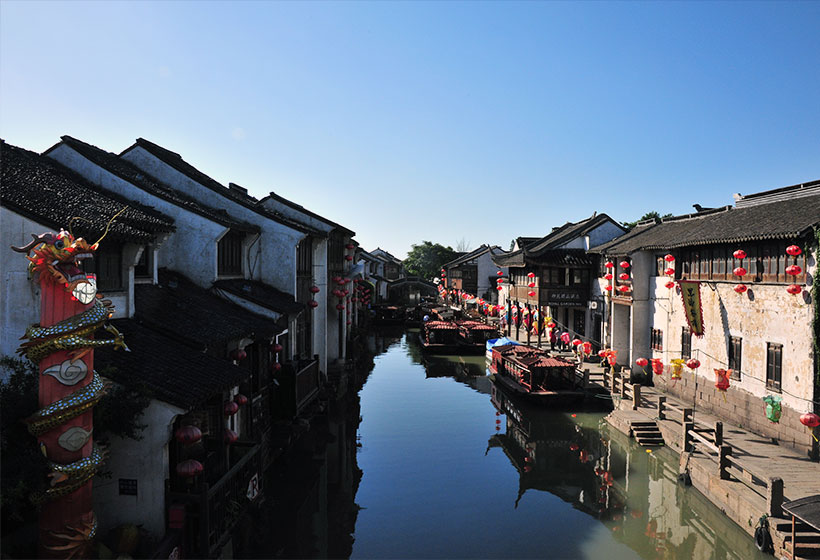
Suzhou was one of the most developed commercial and cultural regions in China during Ming and Qing dynasty. It was also the capital of Wu Kingdom during the Spring and Autumn Period. Today, you can still find evidence of antiquity in the old city district. Take a rickshaw around the area, through narrow lanes and alleys, down by the canal and along some old streets to see the everyday life of locals. On our way, stop over at a local flowers and birds market and a neighborhood food market to further explore this city and people’s old way of living.
Tea culture tour
- Type: Cultural Immersion
- Duration: 3 hours
- Location: Taihu Bi Luo Chun Tea Plantation
- Quota: At least two people
Biluochun green tea is one of the top ten famous green tea in China. It is originated in the Dongting Mountain located in Lake Tai in Suzhou City in Jiangsu Province. The direct translation for Biluochun is ‘green snail spring’. This name is given due to its visual characteristic of tightly rolled green leaves when it is dried. Biluochun is rich in natural antioxidants and vitamins. It brings about lots of benefits which include, reducing the risk of cardiovascular disease, decrease the change of getting cancer and kidney problem, and aid in preventing flu. This type of green tea has white hairs, fruity and floral aroma.
 Tea leaves picking
At the plantation area, you will experience picking of tea leaves, panfrying of tea and to sample a few cups of Biluochun green tea. The harvest take place once a year in spring, around end of March to the first or second week of April. For travellers who are interested in this activity, please consult our trip advisers for its availability.
Visiting Erhu factory
- Type: Cultural Immersion/ Art & Architecture
- Duration: 1 hour
- Location: Wuxi
Erhu, is a bowed two-stringed Chinese vertical fiddle. It is one of the famous Chinese instruments in China. Wuxi County in Jiangsu is one of the art and cultural center in the southern region. In Wuxi, erhu is the way of life of the older generation, and playing erhu has become the pastime of most elderly here. Most erhu craftsmen in Wuxi are based in Mei Village, a tranquil village northeast of the city area. Visit one of the factories in Mei Village, where you will see dozens of middle-aged artisans making each erhu by hand. Find no high-tech production line here, but only some basic tools like disc sanders, drills and saws for making erhu. Most erhu are made with redwood, black sandalwood and rosewood. This instrument has a wooden drum-like resonator that is covered in snakeskin membrane. The way snakeskin is treated and attached to the resonator is crucial in determining the sound quality of the instrument. This step can only be handled by an expert, who can determine what type of erhu he or she can make just by holding that piece of snakeskin.
Customize Your Authentic Jiangsu Tour

If you are interested in the Jiangsu itineraries mentioned above, please contact us, and we will be happy to customize it and provide a quote tailored to your preferences.
Alternatively, if you would like to customize your Jiangsu Tour, please visit our Jiangsu Tour Customized Center. We assure you that you will receive a reply within 24 working hours.
Informative Articles for Your Jiangsu Trip
 Jiangsu
- Travel Guide: attractions, weather, hotels, food, etc.
- Weather: best time and seasons to visit Jiangsu
- Top attractions: well-selected top attractions in Jiangsu
- Local culture: brief history, folk culture, festivals, etc.
- Top destinations: best places to visit in Jiangsu
- Travel itineraries: itineraries for your reference
- Abundant activities: Jiangsu cultural immersions
- Unique perspective: top interesting things to do
- Local food: what to eat while traveling in Jiangsu
- Luxury hotels: accommodation to stay in Jiangsu
- Jiangsu Tours: customized tours for your reference

GREAT FAMILY CHINA TOUR
JULY 2024 We wanted to thank Grace at China Culture tour for organizing a great tour of China. We enjoyed our Beijing - Xian-Chengdu -Guilin -Yangshuo - Shanghai trip. Our local guides Bruce in Beijing, Susan in Xian, Jane in Chengdu, Mike in Guilin and Mary in Shanghai took care of us…read more details »
Teng Han L from SINGAPORE
Ready to Create a Unique Dream Travel?