

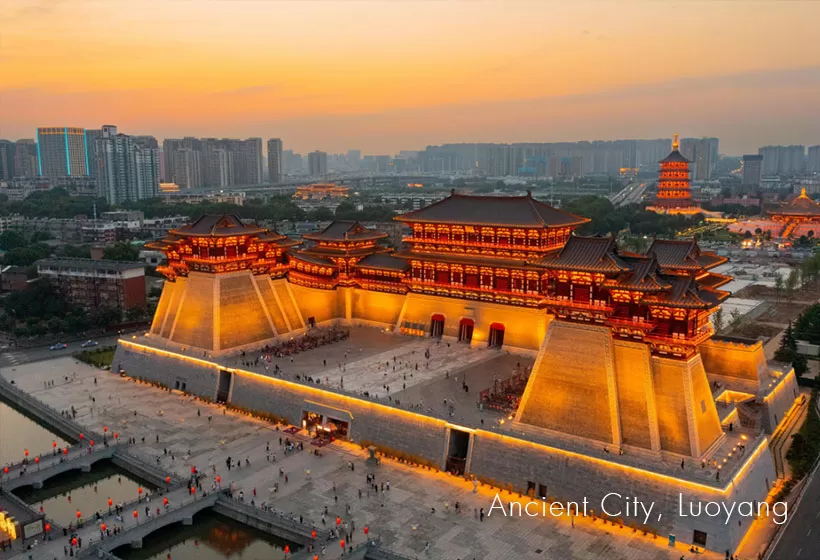
Short Introduction to Henan Local Culture: History, Nation, Diet, Clothing, etc.
Henan Province, literally meaning "south of the Yellow River," is located in the heart of China,and is one of the country's most populous provinces, with a permanent population of approximately 97.44 million as of 2025. Like Beijing and Xi'an , Henan is renowned for its long history and rich cultural heritage. More than 20 dynasties and over 200 emperors established their capitals here, and four of China's Eight Ancient Capitals—Luoyang, Kaifeng, Anyang, and Zhengzhou—are located within the province. As a result, Henan has played a pivotal role in China's political, economic, military, and cultural development for thousands of years.
The province is home to numerous world-famous attractions. Yinxu, the last capital of the Shang Dynasty, provides archaeological evidence of China's 5,000-year civilization, while the Longmen Grottoes and White Horse Temple represent some of the finest achievements of Chinese Buddhist art and culture. Spectacular natural landscapes can be found at Yuntai Mountain and Taihang Grand Canyon. Rich traditions such as Shaolin Kung Fu, ancient Chinese architecture, traditional opera, and local cuisine further highlight Henan's unique cultural charm, making it one of the best places to explore the origins and development of Chinese civilization.
Brief History
Henan is one of the birthplaces of Chinese civilization and has been a center of human activity for more than 500,000 years. During the Western Zhou Dynasty, after King Wu of Zhou defeated the Shang Dynasty, Chengzhou (present-day Luoyang) was established as an important political center for governing the eastern territories.
Following the unification of China by the Qin Dynasty, the commandery system was introduced, and much of present-day Henan came under direct imperial administration.
During the Eastern Han Dynasty, Luoyang became the national capital, once again establishing Henan as China's political, economic, and cultural center.
In the Eastern Jin and Northern and Southern Dynasties periods, the Central Plains experienced frequent warfare and Henan was divided between rival regimes. At the same time, Buddhism flourished and Taoism continued to develop, leaving behind a rich legacy of temples, grottoes, murals, and religious art.
The Sui Dynasty rebuilt Luoyang on a grand scale and constructed the Grand Canal with Luoyang as its central hub, strengthening connections between northern and southern China.
During the Tang Dynasty, Luoyang served as the Eastern Capital and remained one of the most important cities in the empire.
In the Northern Song Dynasty, Kaifeng became the imperial capital, known as Dongjing (Eastern Capital), while Luoyang was designated as the Western Capital. At that time, Kaifeng was one of the largest and most prosperous cities in the world.
During the Ming Dynasty, most of the region came under the administration of Henan Province. In the Qing Dynasty, Henan's provincial boundaries were formally established and largely took their modern form.
Following the founding of the People's Republic of China, administrative adjustments continued, and in 1952 the former Pingyuan Province was dissolved, with parts incorporated into Henan and Shandong. Today, Henan remains one of China's most important historical and cultural provinces, preserving an extraordinary concentration of ancient capitals, archaeological sites, religious monuments, and cultural traditions.
Ethnic Culture
Henan Province is home to all 56 officially recognized ethnic groups in China, with a total minority population of approximately 1.59 million. The distribution of ethnic communities in the province is characterized by a pattern of wide dispersion with small concentrated settlements in certain areas.
Hui people: The Hui ethnic group is the largest and most widely distributed minority group in Henan Province. In some areas, they form relatively concentrated communities, with Hui districts or Hui townships established in cities such as Zhengzhou, Kaifeng, and Luoyang, including Bodang Hui Township in Minquan County and Chaozhuang Hui Township in Sui County. The Hui people have distinctive cultural traditions, particularly in their adherence to halal dietary customs, as well as unique features in clothing, religious beliefs, and daily practices.
Mongolian people: The Mongolian ethnic group ranks second in population among ethnic minorities in Henan. They are mainly concentrated in parts of Nanyang, especially Zhenping County, and also found in areas of Pingdingshan. Many are considered descendants of Yuan Dynasty imperial clans or military settlers. They preserve elements of their traditional culture, including language, clothing, music, and dance, such as Mongolian horsehead fiddle music.
Manchu people: The Manchu population is mainly distributed in western Henan, southwestern Henan mountainous areas, and cities such as Kaifeng. Many are descendants of Qing Dynasty banner troops or migrants from other regions. Over time, they have continued to preserve and develop their cultural traditions through interaction and integration with other ethnic groups.
Local Dialect
Henan dialect is often considered one of the closest living links to the speech traditions of China's historic Central Plains, which strongly influenced the development of official Chinese in different dynasties.
Shaolin Kung Fu
Shaolin Kung Fu originated at the Shaolin Temple, which was founded in AD 495 during the Northern Wei Dynasty. According to legend, the Indian monk Bodhidharma meditated at Shaolin Temple for nine years and introduced physical training methods to help monks improve their health and discipline, laying the foundation for the development of Shaolin martial arts. Over the centuries, generations of warrior monks refined and expanded these techniques, transforming Shaolin Kung Fu into one of the most influential martial arts traditions in China.
Often described by the saying, “All martial arts under heaven originated from Shaolin,” Shaolin Kung Fu is renowned for its rich system of empty-hand forms, weapons training, combat techniques, qigong, and traditional martial arts skills. During the Ming Dynasty, Shaolin monks were repeatedly called upon to assist the imperial court in military campaigns, earning recognition for their martial abilities and helping establish Shaolin's reputation throughout China. Today, Shaolin Kung Fu is regarded as a symbol of Chinese martial arts and remains one of the country's most celebrated cultural traditions.
Traditional Festival and Special Custom
Luoyang Peony Festival (April–May):The Luoyang Peony Festival is the city’s most iconic cultural event, held annually from April to May with the exact dates adjusted according to the blooming season of the peonies. With the theme “Blossoms in Luoyang, Youth in Full Bloom,” the festival features a wide range of activities, including flower appreciation, cultural exhibitions, and trade fairs, offering visitors a vibrant experience of Luoyang’s charm and vitality.
Guanlin International Pilgrimage Ceremony (Held Annually on Guan Yu’s Birthday): Guanlin in Luoyang is believed to be the burial site of the head of Guan Yu, the renowned general of the Shu Kingdom during the Three Kingdoms period. It is regarded as the foremost among China’s three major temples dedicated to Guan Yu. For generations, the Chinese people have admired Guan Yu for his spirit of loyalty, righteousness, benevolence, and courage, while overseas Chinese venerate him as the God of Protection and the Martial God of Wealth. Guanlin Temple has long been a place of continuous incense offerings and pilgrimages. Since 1999, the International Pilgrimage Ceremony has been held here every October, attracting Chinese communities from home and abroad to honor Guan Yu, trace their roots, and celebrate the enduring Guan Yu culture.
Laba Festival (the Eighth Day of the Twelfth Lunar Month): The Laba Festival is an important traditional folk festival in Luoyang, celebrated annually on the eighth day of the twelfth lunar month. Its origins trace back to ancient rituals of ancestor worship and sacrifice to various deities. By the Han Dynasty, it had evolved into a time for family gatherings and ancestral offerings, and during the Northern and Southern Dynasties, the date was fixed on the eighth day of the twelfth lunar month. To this day, people in Luoyang maintain the custom of drinking Laba porridge, a rich blend of grains, beans, and dried fruits that symbolizes abundance and good fortune.
Danao Ceremony: Although not an independent festival, the Danao Ceremony is an important folk ritual held on the day before Laba Festival (traditionally the third xu day after the Winter Solstice, later fixed on the eighth day of the twelfth lunar month). With deep historical roots, it originated in the Zhou Dynasty as a ritual to drive away evil spirits and disease. By the Han Dynasty, it had evolved into a state-level ceremonial practice. As an ancient capital, Luoyang was once a central location for this ceremony. During the ritual, participants wear masks and carry ceremonial instruments, performing dances and chanting scriptures to pray for peace and safety.
Temple Fairs and Folk Celebrations: The first lunar month is undoubtedly the liveliest time of the year in Henan. During this period, temple fairs and traditional folk celebrations, known as Shehuo, are held throughout the province. Among the most famous is the ancient temple fair in Xunxian County, often referred to as the “No. 1 Temple Fair in North China,” featuring more than twenty forms of folk performances, including stilt walking, lion dances, yangko dances, land boat dances, bamboo horse performances, and elaborate beige and taige processions. The Huoshentai Temple Fair in Shangqiu, which dates back to the Song Dynasty, combines religious worship, folk entertainment, and traditional markets. Other well-known celebrations include the Spring Festival Temple Fair at Wansui Mountain in Kaifeng and the grand temple fair at the Taihao Mausoleum in Huaiyang. In addition to watching performances, visitors can experience traditional handicrafts such as making Nigugu clay whistles and Kaifeng woodblock New Year prints, or purchase locally inspired cultural souvenirs.
Dragon Boat Festival: The Dragon Boat Festival, celebrated on the fifth day of the fifth lunar month, is closely associated with the ancient poet Qu Yuan. In Henan, Xixia County is home to Quyuan Gang, believed to be the only surviving historical place name in China directly named after Qu Yuan. Influenced by Qu Yuan culture, local communities in Xixia continue the unique tradition of celebrating two Dragon Boat Festivals each year: the “Lesser Dragon Boat Festival” on the fifth day of the fifth lunar month and the “Greater Dragon Boat Festival” on the fifteenth day.
Alongside familiar customs such as eating zongzi, making scented sachets, hanging mugwort leaves, and flying kites, local families traditionally apply realgar wine to children's ears, necks, and navels as a symbolic way to ward off harmful influences and wish for health and protection.
Diet Style and Culinary Tastes
Henan cuisine, also known as Yu Cuisine, is one of China's traditional culinary traditions, with a history dating back centuries. By the Song Dynasty, it had already developed into a refined style of imperial cuisine known for its balanced flavors and meticulous preparation. Henan dishes emphasize carefully selected ingredients, harmonious combinations of flavors, rich and savory broths, and attractive presentation.
Influenced by imperial, official, marketplace, and folk culinary traditions, Henan cuisine has evolved into four distinctive regional styles:
Eastern Henan (Kaifeng): Characterized by balanced flavors and a strong adherence to traditional cooking methods. Braised dishes are particularly representative, such as Pa Guangdu (Braised Fish Maw).
Western Henan (Luoyang): Best known for the famous Luoyang Water Banquet, in which almost every dish is served with broth or sauce. Flavors tend to be slightly sour and spicy, with Mudan Yancai (Peony Swallow Dish) being one of the signature specialties.
Southern Henan (Xinyang): Renowned for its slow-cooked stews and the use of fresh ingredients from local rivers and lakes. Dishes are generally a little spicier and are often flavored with Jingjie (Schizonepeta), a fragrant local herb.
Northern Henan (Xinxiang and Anyang): Known for making excellent use of local agricultural products. Flavors are typically richer and more robust, while braised meats and roasted specialties are especially popular. Famous examples include Daokou Braised Chicken from Huaxian County.
Cultural Heritage
Henan is one of China's most culturally significant provinces, home to five UNESCO World Heritage properties and more than one hundred national-level intangible cultural heritage items. Its World Heritage treasures include the Longmen Grottoes, Yinxu, the Historic Monuments of Dengfeng in 'The Centre of Heaven and Earth', as well as sections of the Silk Roads and the Grand Canal located within the province.
Henan's rich intangible cultural heritage is equally impressive. Highlights include Yuju (Henan Opera), one of China's five major opera genres and the country's most influential regional opera form; Zhuxianzhen Woodblock New Year Prints from Kaifeng; Yellow River clay sculpture; the traditional firing techniques of Ru Porcelain; Kaifeng Pan Drum performances; the Fire Dragon Dance; and the Xinyang Flower-Pole Dance. Together, these traditions reflect the province's deep artistic heritage and enduring cultural vitality.
Customize Your Authentic Henan Tour
If you are interested in the Henan itineraries mentioned above, please contact us, and we will be happy to customize it and provide a quote tailored to your preferences.
Alternatively, if you would like to customize your Henan Tour, please visit our Henan Tour Customized Center. We assure you that you will receive a reply within 24 working hours.
Informative Articles for Your Henan Trip
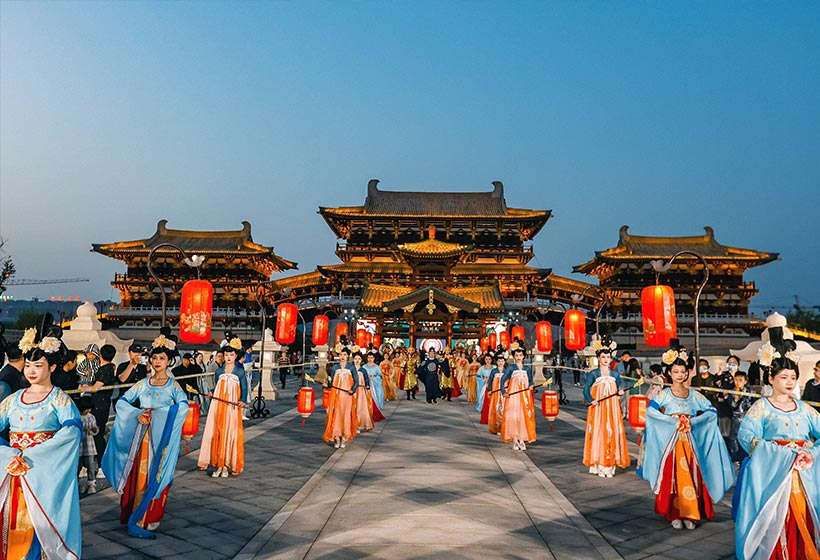 Henan
Henan- Travel Guide: attractions, weather, hotels, food, etc.
- Weather: best time and seasons to visit Henan
- Top attractions: well-selected top attractions in Henan
- Local culture: brief history, folk culture, festivals, etc.
- Top destinations: best places to visit in Henan
- Travel itineraries: itineraries for your reference
- Abundant activities: Henan cultural immersions
- Unique perspective: top interesting things to do
- Local food: what to eat while traveling in Henan
- Luxury hotels: accommodation to stay in Henan
- Henan Tours: customized tours for your reference

GREAT FAMILY CHINA TOUR
JULY 2024 We wanted to thank Grace at China Culture tour for organizing a great tour of China. We enjoyed our Beijing - Xian-Chengdu -Guilin -Yangshuo - Shanghai trip. Our local guides Bruce in Beijing, Susan in Xian, Jane in Chengdu, Mike in Guilin and Mary in Shanghai took care of us…read more details »
Teng Han L from SINGAPORE
Ready to Create a Unique Dream Travel?