


Weather, the best time to visit Anhui
When is the best time to visit
The best time to visit Anhui, renowned for its spectacular mountains, UNESCO World Heritage villages, distinctive Hui-style architecture, and rich cultural heritage, is from March to May and September to November. With mild temperatures and generally clear skies, these seasons are ideal for exploring the province's iconic attractions, sampling authentic Hui cuisine, and enjoying outdoor activities such as hiking, cable car rides, and photography.
Weather by seasons
Anhui Province is located in eastern China and has a distinct four-season climate. The average annual temperature across the province ranges from 14°C to 17°C, while annual precipitation varies from about 750 mm to 1,700 mm. Rainfall generally increases from north to south, with southern Anhui receiving more precipitation, typically around 1,200 to 1,700 mm per year. Areas such as Huangshan and Xuancheng experience relatively abundant rainfall due to their mountainous terrain.
The best time to visit Anhui varies depending on what you're interested in seeing and doing while you're there. However, here are a few general tips:
Spring (March to May): The spring months offer comfortable weather and clear skies, making them ideal for sightseeing and outdoor activities.
Summer (June to August): Anhui is hot and humid in summer, with a plum rain season from June to July and hot, dry weather in July and August. Occasional heavy rainstorms may occur. Mount Huangshan and Jiuhua Mountain are ideal summer escapes, where visitors can enjoy cool mountain scenery and dramatic sea of clouds or waterfalls after rainfall. However, expect larger crowds and higher prices during this peak season.
Autumn (September to November): This is another popular time to visit, as autumn offers the most comfortable weather of the year, with stunning scenery and vibrant fall colors across ancient villages and hillsides.
Winter (December to February): Winter in Anhui is cold and relatively dry, with a colder, drier climate in the north and damp, chilly conditions in the south. Visitors can enjoy beautiful rime, ice formations, and snow-covered landscapes, while attractions are less crowded and often offer lower ticket prices. However, some cable cars may be closed during this period, so be sure to prepare for slippery paths and keep warm.
Overall, the best time to visit Anhui will depend on your personal preferences and travel itinerary. But no matter when you go, you're sure to enjoy the unique charm and unforgettable experiences that Anhui has to offer.
Anhui travel guide based on the weather monthly
Anhui, a province in eastern China, has a humid subtropical climate with four distinct seasons. Summers are hot and humid, while winters are cool to cold. Here is a general guide to Anhui's weather throughout the year:
December – February: During the winter months, temperatures in Anhui generally range from 0–10°C (32–50°F), although mountain regions can be significantly colder. Winter is an excellent time to admire the snow-covered peaks of Huangshan, soak in natural hot springs, and explore ancient villages such as Hongcun and Xidi without the crowds.
March – May: As spring arrives, temperatures gradually rise to around 10–20°C (50–68°F), making it one of the best seasons to visit Anhui. Huangshan frequently offers spectacular seas of clouds, Hongcun becomes even more picturesque when surrounded by blooming rapeseed flowers, and Jiuhua Mountain is at its most beautiful, with lush greenery and pleasant weather for hiking and sightseeing.
June – August: Anhui experiences hot and humid weather during the summer, with temperatures typically ranging from 23–34°C (73–93°F). It is also the perfect time to escape the heat by visiting the province's mountain resorts. Mount Huangshan, Jiuhua Mountain, Mount Tianzhu, and Guniujiang National Nature Reserve offer cooler temperatures and are ideal for hiking, stream trekking, boating, and enjoying the refreshing mountain scenery.
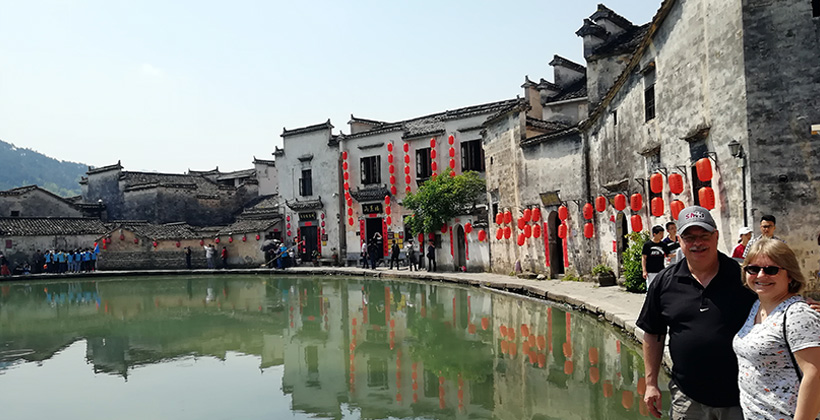
September – October: The autumn months bring cooler and drier weather, with temperatures averaging around 18–24°C (64–75°F). This is one of the best times to visit Anhui, when ancient villages and mountains are at their most picturesque. Hongcun and Tachuan Village are especially beautiful, as the Chinese tallow trees turn from green to golden yellow and then brilliant red, creating a striking contrast with the white-walled, black-tiled Hui-style architecture and evoking the charm of a traditional Chinese ink painting.
What to Pack for a Trip to Anhui
Spring (March to May)
- Lightweight clothing, such as cotton shirts and pants
- A light jacket or sweater for cooler days
- Comfortable walking shoes
- Sunglasses and sunblock
- Umbrella or raincoat, as spring is the rainy season in Anhui
Summer (June to August)
- Lightweight clothing, such as long-sleeved shirts and pants
- A light jacket or fleece for cooler mornings and evenings
- Comfortable walking or hiking shoes
- Umbrella or lightweight rain jacket
- Sunscreen and sunglasses
Autumn (September to November)
- Lightweight clothing for daytime
- A light jacket or sweater for cooler mornings and evenings
- Comfortable walking or hiking shoes
- Sunscreen and sunglasses
Winter (December to February)
- Warm clothing, including a winter coat and thermal layers
- Scarf, hat, and gloves
- Waterproof, non-slip walking shoes or hiking boots
- Moisturizer and lip balm
- Sunglasses for snowy mountain areas
Note: It's always a good idea to check the local weather forecast and pack accordingly, as temperatures can vary depending on the location within Anhui.
Anhui Weather by Month/Year Round
If you can freely choose when to travel to Anhui, it is recommended to select the most suitable month based on your interests and preferences. If you don't have the flexibility to choose, it is advisable to understand the advantages and disadvantages of traveling to Anhui in each month. According to them, you can be better prepared in advance.
View your month: January, February, March, April, May, June, July, August, September, October, November, December
January: is January a Good Time to Visit?
From a Climate and Average Temperature Perspective
From a climatic perspective, January is the coldest month of the year, with average temperatures ranging from -1°C to 2°C (30–36°F). In the Huizhou area, including Hongcun and Tunxi, temperatures typically range from 0°C to 8°C (32–46°F), with frequent cloudy and rainy days. However, these conditions often create spectacular winter scenery, including rime, snow-covered landscapes, seas of clouds, and frost-covered pine trees and rock formations on Mount Huangshan. After snowfall, Hongcun and Xidi become especially picturesque, with their white-walled, black-tiled Hui-style architecture complemented by a light blanket of snow and morning mist, creating the atmosphere of a traditional Chinese ink painting. Stone paths can become icy and slippery, so visitors should exercise caution. January is best suited to travelers who want to experience Huangshan's winter scenery, enjoy the peaceful atmosphere of ancient villages, and avoid the peak tourist crowds.
From a budget Perspective
From a budget perspective, it's a good month for traveling as there are fewer people and relatively lower prices.
In January, Anhui sees fewer tourists due to the cold weather, making it an off-peak tourist season. Consequently, hotel and restaurant prices are significantly lower compared to usual. Many attractions don't require queuing, which can reduce travel costs and save travel time.
February: Is February a Good Time to Visit?
From a Climate and Average Temperature Perspective
Anhui remains cold and damp in February, with occasional rain or snow and noticeable temperature variations between day and night. Average temperatures across the province range from 2°C to 5°C (36–41°F). If your visit coincides with the Chinese New Year (Spring Festival), you can experience traditional Huizhou festive customs alongside spectacular winter scenery, including snow-covered landscapes and seas of clouds at Mount Huangshan. This is an excellent time for travelers who enjoy local traditions, winter photography, and quieter attractions. Before heading into the mountains, check the latest weather forecasts and avoid hiking on days with heavy rain, snow, or strong winds.
From a budget Perspective
From a budget perspective, it's a good month for traveling as there are fewer people and relatively lower prices.
In February, Anhui sees fewer tourists due to the cold weather, making it an off-peak tourist season. Consequently, hotel and restaurant prices are significantly lower compared to usual. Many attractions don't require queuing, which can reduce travel costs and save travel time. However, Chinese New Year (Lunar New Year) typically falls in February, and the Lantern Festival on the 15th day of the lunar new year, is one of the most impressive festivals in Anhui, during which there is an increase in tourist traffic, leading to corresponding increases in travel costs across various aspects.
March: Is March a Good Time to Visit?
From a Climate and Average Temperature Perspective
Temperatures begin to rise in March, making it one of the most comfortable months to visit Anhui. Daytime temperatures typically range from 10°C to 20°C (50–68°F), although mornings and evenings can still be chilly, so dressing in layers is recommended. Cloudy and rainy weather becomes more frequent in late March, creating ideal conditions for the spectacular seas of clouds that make Mount Huangshan famous. This is also the best time to admire the blooming rapeseed flowers, especially around Hongcun, Xidi, and other ancient Huizhou villages, where the golden fields beautifully complement the white-walled, black-tiled Hui-style architecture, creating a landscape reminiscent of a traditional Chinese ink painting. Over all, the weather is mild, making it ideal for tourism and various outdoor activities.
From a budget Perspective
In March, Anhui sees fewer tourists compared to other months but more than other cities. Although March is not the peak tourist season in Anhui, the climate and scenery during this period are suitable for travel. The costs are normal, making it a good time to avoid the peak tourist season.
April: Is April a Good Time to Visit?
From a Climate and Average Temperature Perspective
April is one of the best times to visit Anhui, with pleasant temperatures ranging from 15°C to 25°C (59–77°F). The comfortable weather is ideal for hiking and outdoor sightseeing, without the summer heat and humidity or the damp chill of winter. Spring flowers are in full bloom, while the frequent seas of clouds create spectacular scenery in the mountains. Visitors can also stroll through picturesque ancient towns that resemble traditional Chinese ink paintings. Around the Qingming Festival, many local cultural activities are held, including tea picking and tea-making experiences in the tea plantations. Rivers, streams, and ponds are filled with fresh spring water, making the landscapes especially lush and beautiful.
From a budget Perspective
April offers a good balance between pleasant weather and reasonable prices. Travel expenses are generally lower than during the peak summer season and the May Day holiday. If you avoid the Qingming Festival break, you can enjoy Anhui’s stunning spring scenery with great value for money.
May: Is May a Good Time to Visit?
From a Climate and Average Temperature Perspective
May is one of the best months to visit Anhui, with warm and comfortable temperatures ranging from 18–28°C (64–82°F). The pleasant weather is ideal for hiking, sightseeing, and exploring the province's ancient villages and mountain scenery.
While occasional showers may occur, they often create spectacular seas of clouds over Mount Huangshan, Mount Tianzhu, and Jiuhua Mountain, making them especially beautiful. After the rain, the lotus leaves on South Lake in Hongcun appear even more vibrant, while the surrounding mountains, water, and ancient Huizhou architecture create a fresh, picturesque landscape reminiscent of a traditional Chinese ink painting.
From a budget Perspective
May is one of the busiest travel months in Anhui, mainly due to the May Day holiday (May 1–5). During this holiday period, visitor numbers surge, leading to higher prices for accommodation, transportation, and other travel services. Outside the May Day holiday, however, travel costs generally return to normal, making the rest of May an excellent time to visit.
June: Is June a Good Time to Visit?
From a climate and average Temperature perspective
June brings warm weather with average temperatures of 22–30°C (72–86°F). The first half of the month is usually warm with a mix of sunshine and cloudy skies, while the second half marks the arrival of the rainy season, bringing higher humidity and occasional heavy downpours. Although rain may interrupt outdoor activities, clear intervals after showers often produce spectacular seas of clouds over Mount Huangshan and Jiuhua Mountain. Visitors should take extra care on slippery stone steps, and those planning to hike are advised to wear a rain jacket rather than carry an umbrella.
From a budget perspective
In June, Tourism is in a stable period in Anhui, with average tourist numbers and the costs are normal level.
July: Is July a Good Time to Visit?
From a climate and average Temperature perspective
July marks the height of summer in Anhui, with hot and humid weather and average temperatures ranging from 27–35°C (81–95°F). Lowland cities such as Hefei, Wuhu, and Anqing often experience temperatures above 35°C (95°F). Influenced by the rainy season, July also brings frequent rainfall and occasional heavy downpours. While rain increases the chances of seeing lush waterfalls and streams at their fullest, clear sunrises and spectacular seas of clouds over Mount Huangshan and Jiuhua Mountain are less predictable, as dense mountain fog can significantly reduce visibility.
When hiking, wear non-slip hiking shoes, bring a lightweight rain jacket instead of an umbrella, use sunscreen and insect repellent, and avoid cliffside trails during thunderstorms or severe weather warnings. Travelers seeking clear skies and stable weather may want to avoid visiting Anhui in July if their schedule is flexible.
From a budget perspective
From a budget perspective, July is not the best time to visit Anhui if you're looking for better value. As July falls during China's summer school holidays, it is one of the peak travel seasons, resulting in higher prices for hotels, transportation, and other travel services. Accommodation near popular destinations such as Mount Huangshan and Jiuhua Mountain is often significantly more expensive than during the shoulder season. In addition, the hot, humid weather and frequent rainfall may make sightseeing less comfortable and occasionally disrupt outdoor activities.
August: Is August a Good Time to Visit?
From a climate and average Temperature perspective
August: August remains hot and humid in Anhui, with average temperatures ranging from 26–34°C (79–93°F). Humidity levels are high, making the weather feel warmer, and afternoon thunderstorms are frequent. For a more comfortable experience, mountainous areas such as Mount Huangshan and Jiuhua Mountain are better choices, offering cooler temperatures and unique summer scenery, including sunrise views, seas of clouds, stream trekking, and refreshing forest landscapes. In contrast, sightseeing in riverside and lowland cities such as Hefei, Wuhu, and Bengbu can feel less comfortable, especially for long walks or extended outdoor activities due to the heat and humidity.
From a budget perspective
From a budget perspective, August might not be the best time to visit Anhui if you are looking for lower prices. As August falls within China's summer vacation period, it is one of the peak travel seasons for domestic tourism. This can lead to higher prices for hotels, transportation, and attraction tickets. Accommodation and services around popular destinations such as Mount Huangshan and Jiuhua Mountain are often significantly more expensive than in cities. Therefore, it is recommended to plan your itinerary in advance to secure tickets for your preferred attractions and avoid fully booked hotels. Alternatively, consider visiting in late August, when the summer holiday peak gradually begins to ease.
September: is September a Good Time to Visit?
From a climate and average Temperature perspective
September is one of the best times to visit Anhui, as the summer heat gradually fades and early autumn begins to appear. Temperatures become pleasant, ranging from around 20–30°C (68–86°F) in the lowland areas and 12–25°C (54–77°F) in the mountainous regions. With the summer holiday crowds gone and the National Day holiday still ahead, September offers a more relaxed travel experience, making it ideal for hiking, exploring ancient villages, and enjoying various outdoor activities.
From a budget perspective
It's the off-peak season, as the summer vacation has just ended and students and families have returned to school and work. During this time, you can enjoy less crowded attractions. Compared to peak seasons, travel costs are at a normal level.
October: is October a Good Time to Visit?
From a Climate and Average Perspective
October is one of the best months to visit Anhui. The weather is predominantly sunny to partly cloudy, with cool and comfortable conditions and average temperatures ranging from 13–22°C (55–72°F). Mornings and evenings are pleasantly cool, while daytime temperatures remain mild, free from the summer heat and winter chill. Southern Anhui, including Mount Huangshan, Tachuan Village, and Chengkan Ancient Village, as well as the Dabie Mountains, enters its peak autumn foliage season. Mountainsides are painted in brilliant shades of red, orange, and gold, creating some of the province's most spectacular scenery.
From a budget Perspective
From a budget Perspective, In October, its peak season of Anhui with increased tourist traffic due to the National Day and Mid-Autumn Festival. This results in longer queues at various attractions, and consequently, there is an increase in travel costs such as accommodation, transportation, and meals. During this time, there are crowds, and travel costs are higher, resulting in a less enjoyable experience.
November: is November a Good Time to Visit?
From a Climate and Average Perspective
November is one of the best months to visit Anhui, with average temperatures ranging from 5–20°C (41–68°F). The weather is generally dry, sunny, and comfortable, making it an ideal time for hiking, photography, and sightseeing. Autumn in the Huizhou region is renowned for the perfect harmony between nature and traditional Hui-style architecture. Destinations such as Hongcun, Xidi, Tachuan Village, and Chengkan Ancient Village showcase brilliant autumn foliage set against white-walled, black-tiled Hui-style buildings, creating breathtaking scenery. You can also experience the traditional Shaiqiu (Autumn Harvest Drying) custom in Wuyuan Huangling Scenic Area, where colorful crops are spread out to dry on wooden racks and rooftops, forming one of eastern China's most iconic autumn landscapes.
From a budget Perspective
From a cost perspective, In November, this period sees fewer tourists compared to October in Anhui, with relatively fewer visitors. Because of this, travel costs are returning in costs returning to normal levels, allowing tourists to explore various attractions more comfortably. It's a good month for traveling economically.
December: is December a Good Time to Visit?
From a Climate and Average Perspective
December is cold across Anhui, with average temperatures ranging from -2°C to 6°C (28–43°F), while mountainous areas are often even colder. The weather is generally dry with plenty of sunny days, creating favorable conditions for spectacular seas of clouds and rime-covered landscapes, especially in Mount Huangshan. However, occasional cold fronts can bring snow, freezing rain, and icy conditions. Mountain trails, particularly stone steps in the early morning or after rainfall or snowfall, can become extremely slippery. When hiking, wear warm clothing and non-slip footwear, and always check the latest weather forecast and scenic area announcements before setting out, as icy roads and temporary cable car closures may occur in the mountains.
From a budget Perspective
From a budget perspective, December falls during the off-peak season, so you'll enjoy fewer crowds at popular attractions and lower hotel prices compared to peak months like October or during Chinese New Year, making it a great opportunity to visit Anhui.
Customize Your Authentic Anhui Tour

If you are interested in the Anhui itineraries mentioned above, please contact us, and we will be happy to customize it and provide a quote tailored to your preferences.
Alternatively, if you would like to customize your Anhui Tour, please visit our Anhui Tour Customized Center. We assure you that you will receive a reply within 24 working hours.
Informative Articles for Your Anhui Trip
 Anhui
Anhui- Travel Guide: attractions, weather, hotels, food, etc.
- Weather: best time and seasons to visit Anhui
- Top attractions: well-selected top attractions in Anhui
- Local culture: brief history, folk culture, festivals, etc.
- Top destinations: best places to visit in Anhui
- Travel itineraries: itineraries for your reference
- Abundant activities: Anhui cultural immersions
- Unique perspective: top interesting things to do
- Local food: what to eat while traveling in Anhui
- Luxury hotels: accommodation to stay in Anhui
- Anhui Tours: customized tours for your reference


GREAT FAMILY CHINA TOUR
JULY 2024 We wanted to thank Grace at China Culture tour for organizing a great tour of China. We enjoyed our Beijing - Xian-Chengdu -Guilin -Yangshuo - Shanghai trip. Our local guides Bruce in Beijing, Susan in Xian, Jane in Chengdu, Mike in Guilin and Mary in Shanghai took care of us…read more details »
Teng Han L from SINGAPORE
Ready to Create a Unique Dream Travel?