

Short Introduction to Anhui Local Culture: History, Nation, Diet, Architecture, etc.
Brief Introduction of Huangshan Culture
Anhui, abbreviated as "Wan ", is located in East China and the heart of the Yangtze River Delta, with Hefei as its capital. Covering an area of approximately 140,100 square kilometers, it borders Jiangsu and Zhejiang to the east, Hubei and Henan to the west, Jiangxi to the south, and Shandong to the north.
The province is generally divided into Northern, Central, and Southern Anhui, each offering distinctive landscapes, local traditions, and cultural heritage.
Anhui's rich cultural heritage is rooted in its Five Major Cultural Traditions: Huizhou Culture, Yangtze River Culture, Huaihe River Culture, Grand Canal Culture, and Huangmei Opera Culture. Together, they have shaped the province's unique identity and enduring charm.
To truly appreciate Anhui's cultural heritage, wander through historic streets such as Tunxi Ancient Street, Yuliang Ancient Street, and Sanhe Ancient Town, where centuries-old architecture and traditional lifestyles are still preserved. Visit Jiuhua Mountain, one of China's Four Sacred Buddhist Mountains, or explore Qiyun Mountain, one of the country's Four Sacred Taoist Mountains, where ancient temples blend harmoniously with spectacular natural scenery.
Brief History
Human settlement in Anhui dates back millions of years. Archaeological discoveries at the Renzidong Site in Fanchang suggest that early humans lived here as far back as 2.5 million years ago, while the Hexian Man Site in Longtandong Cave preserves the remains of prehistoric humans who inhabited the region approximately 300,000 to 400,000 years ago.
Throughout China's imperial history, Anhui formed part of several important administrative regions under successive dynasties. During the Qin Dynasty (221–206 BC), the area was incorporated into the imperial commandery system, laying the foundation for centralized administration. Over the following centuries, Anhui continued to develop as an important political, economic, and cultural crossroads between northern and southern China.
The name "Anhui" was officially adopted in 1667 during the Qing Dynasty, combining the first characters of Anqing Prefecture and Huizhou Prefecture. Since then, Anhui has developed into a province renowned for its magnificent mountains, distinctive Huizhou culture, and rich historical heritage.
Following the founding of the People's Republic of China, northern and southern Anhui were merged in 1952 to re-establish Anhui Province, with Hefei designated as its provincial capital.
Ethnic Culture
Anhui is home to all 56 of China's officially recognized ethnic groups, although the Han Chinese account for more than 95% of the province's population. The province's indigenous ethnic minorities include the Hui, Manchu, and She peoples, each preserving distinctive traditions that enrich Anhui's cultural diversity.
Language
Several Chinese dialects are spoken across Anhui, reflecting the province's geographical diversity. From north to south, the major dialect groups include Mandarin, Gan Chinese, Wu Chinese, and Huizhou Chinese (Huizhou Dialect). Mandarin is the most widely spoken and understood throughout the province.
Hui People
The Hui are Anhui's largest indigenous ethnic minority. Their ancestors arrived in the province during the 13th century, when merchants, craftsmen, and soldiers from Central Asia, Persia, and the Arab world settled in the region. Over the centuries, Hui culture blended harmoniously with local Huizhou traditions. Visitors can admire mosques that combine traditional Hui-style architecture, including the distinctive horse-head walls, with Islamic domes and decorative elements. Hui cuisine follows halal dietary traditions while incorporating the refined cooking techniques of Anhui cuisine.
Manchu People
The Manchu community in Anhui is centered in Wanyan Paifang Village in Feidong County, the province's only officially recognized Manchu village. Many residents still bear the historic Wanyan surname, once associated with the royal family of the Jin Dynasty. The village offers a rare glimpse into Manchu heritage outside northeastern China.
She People
The She people mainly live in Yunti She Ethnic Township in Ningguo, having migrated from neighboring Zhejiang Province about a century ago. They continue to preserve traditional wedding customs, colorful ribbon weaving, and ceremonial traditions. During festivals, women still wear vibrant costumes inspired by the traditional Phoenix Dress, reflecting the She people's rich cultural heritage.
Hui-Style Architecture
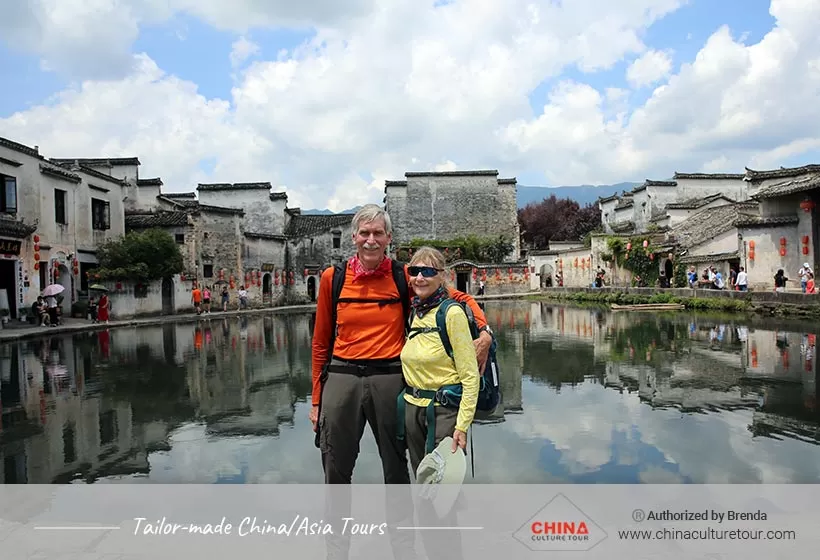
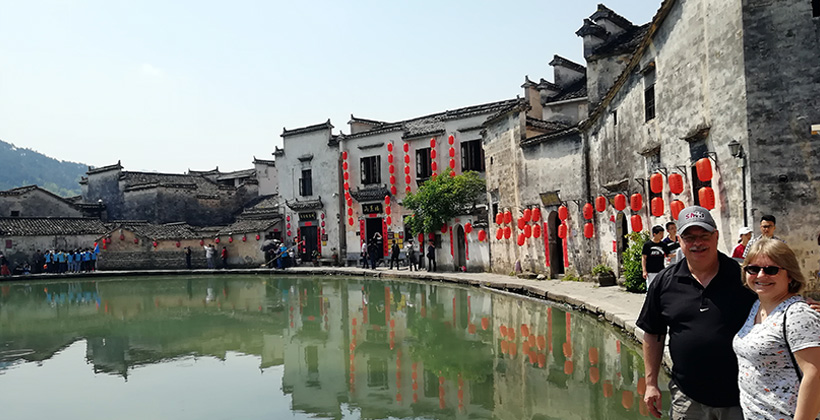
Huizhou architecture is known for its whitewashed walls, grey-tiled roofs, and intricately carved brick archways. The most iconic structures include residences, ancestral halls, and memorial archways, often referred to as the "Three Masterpieces of Huizhou Architecture." Famous examples can be found in villages like Hongcun and Xidi.
The layout typically follows a central axis with enclosed courtyards, reflecting the principles of yin-yang balance and harmony with the five elements. These inward-facing homes prioritize both privacy and practicality. Central courtyards, or "sky wells", allow light and air to flow in, while also collecting rainwater—symbolizing wealth in Chinese culture.
The craftsmanship of brick, wood, and stone carvings in Huizhou architecture is exceptionally refined, with some carvings so delicate they are finer than a strand of hair. The motifs range from flowers, birds, and fish to folk tales and historical figures. These intricate details are often found on door frames, window lattices, and eaves, serving both as artistic decoration and practical features for ventilation and security.
The horse-head wall, also known as a fire wall, is one of the most distinctive features of Huizhou architecture and a gem of traditional Chinese building design. These towering walls serve a practical purpose by preventing the spread of fire between adjacent houses, while also creating a striking visual rhythm with their staggered heights.
From above, the rooftops form a dynamic pattern resembling a herd of galloping horses, symbolizing prosperity and the flourishing of family lineages.
Traditional Festivals and Folk Culture
Anhui is home to a rich variety of traditional festivals and folk customs, many of which have been passed down for centuries and remain an important part of local life.
Fish Lantern Festival (Xiyu Lanterns): is a well-known traditional folk activity in Huangshan, dating back to the Ming Dynasty. Every year from the 13th to the 16th day of the first lunar month, villagers hold a four-day parade of giant fish-shaped lanterns. The event symbolizes abundance and good fortune in the new year, as the word "fish" (yú) sounds like "surplus" (yú) in Chinese, conveying the wish for prosperity year after year.
Chongyang Temple Fair: is another important traditional folk event in Huangshan, usually held on the Double Ninth Festival (the ninth day of the ninth lunar month). Originally a religious gathering to worship the deity King Zhou Bodhisattva, it has gradually evolved into a lively rural trade fair. Today, the fair features a variety of performances and cultural activities, including opera shows, embroidered ball throwing, and Mulian Opera—a folk drama rooted in filial piety. It’s a vibrant celebration of tradition, community, and local heritage.
Huizhou Bench Dragon Dance: celebrated during the Spring Festival and Lantern Festival, the Huizhou Bench Dragon Dance is one of Anhui's most spectacular folk traditions. Long wooden benches, each contributed by a local household, are connected to form the body of a giant dragon, symbolizing family unity and prosperity. At night, the dragon is illuminated with colorful lanterns and paraded through ancient villages to the sound of drums and gongs.
Anmiao Festival: held in Jixi and Shexian shortly after the Grain in Ear (Mangzhong) solar term or on the sixth day of the sixth lunar month, the Anmiao Festival is a traditional harvest celebration honoring Wang Hua, a revered historical figure of Huizhou. Festivities include deity processions, blessing ceremonies for the fields, and the making of Anmiao Guo, a traditional pastry symbolizing peace and good fortune throughout the year.
Jiuhua Mountain Temple Fair: held annually around the 30th day of the seventh lunar month, the Jiuhua Mountain Temple Fair attracts thousands of Buddhist pilgrims from across China. Visitors can witness solemn religious ceremonies, incense offerings, lively markets, and traditional performances, creating a unique blend of spiritual devotion and local festivity.
Fuyang Torch Festival: in Fuyang, the Mid-Autumn Festival is celebrated with the distinctive Torch Festival. After nightfall, local residents carry flaming torches through villages to commemorate the Red Turban Rebellion led by Liu Futong during the Yuan Dynasty. The glowing procession creates a memorable festive atmosphere.
Chizhou Nuo Opera: recognized as one of China's oldest surviving theatrical traditions, Chizhou Nuo Opera is often called a "living fossil" of Chinese opera. Performed from the seventh to the fifteenth day of the first lunar month, actors wear hand-carved wooden masks and present ancient rituals believed to ward off evil spirits and pray for peace, health, and a prosperous year.
Diet Style
Anhui cuisine is centered around Hui cuisine, one of China's Eight Great Culinary Traditions. Renowned for its mastery of braising, stewing, and steaming, Hui cuisine emphasizes rich flavors, deep-colored sauces, and precise cooking techniques. Fresh ingredients are often sourced from the province's mountains, rivers, and lakes, resulting in hearty dishes with distinctive regional character.
Anhui cuisine can be broadly divided into three distinct regional styles. Southern Anhui (including Huangshan and Huizhou) is renowned for its use of fermented ingredients, wild mountain delicacies, and rich, savory flavors. Northern Anhui (including Huainan, Fuyang, and Suzhou) is known for hearty wheat-based dishes, lamb, and roast chicken, offering bold flavors that are especially satisfying in colder weather. Central Anhui (including Hefei and Anqing) blends the culinary traditions of the north and south, featuring dishes that are both flavorful and delicately prepared.
Huizhou Stinky Mandarin Fish: The signature dish of Hui cuisine, Huizhou Stinky Mandarin Fish is lightly salted and naturally fermented before being braised. Despite its pungent aroma, the fish has a remarkably delicate, savory flavor and firm, flaky flesh, making it one of Anhui's most iconic culinary specialties.
Huangshan Hairy Tofu: A unique local delicacy, Huangshan Hairy Tofu is naturally fermented until a layer of fine white mold develops on the surface. It is then pan-fried until golden and crispy on the outside while remaining soft and creamy inside, and is traditionally served with chili sauce. According to local legend, the dish was a favorite of Zhu Yuanzhang, who was the founding emperor of the Ming Dynasty.
Huainan Beef Soup: A beloved specialty of Northern Anhui, Huainan Beef Soup is prepared by simmering beef bones for six to seven hours to create a rich, milky broth. Served with shredded tofu sheets, glass noodles, and crispy sesame flatbread, it is a hearty and comforting meal enjoyed throughout the province.
Read More Local Food and Restaurants in Anhui »
Cultural Heritage
Anhui is home to several UNESCO World Heritage Sites, including Mount Huangshan, recognized for both its outstanding natural beauty and cultural significance; the ancient villages of Hongcun and Xidi, celebrated for their remarkably preserved Huizhou architecture; and the Grand Canal (Anhui Section). The province also boasts numerous nationally protected cultural sites, such as the Ancient Huizhou Architectural Complexes and the Imperial City of the Ming Dynasty in Fengyang. As one of the birthplaces of Huizhou Culture, Anhui has nurtured many influential historical figures, including Laozi, Bao Zheng, and Cao Cao, whose legacies continue to shape Chinese history and philosophy.
Anhui's intangible cultural heritage is equally remarkable. The province is the birthplace of Huangmei Opera, one of China's best-loved traditional opera forms, while Hui Opera played an important role in the development of Peking Opera. Anhui is also renowned for the Four Treasures of the Study—Xuan Paper, Huizhou Inksticks, Xuan Brushes, and She Inkstones—which have been treasured by Chinese scholars for centuries. Traditional tea-making techniques for famous teas such as Huangshan Maofeng, Keemun Black Tea (Qimen Hongcha), Taiping Houkui, and Lu'an Guapian further reflect the province's rich artistic and cultural heritage.
Customize Your Authentic Anhui Tour

If you are interested in the Anhui itineraries mentioned above, please contact us, and we will be happy to customize it and provide a quote tailored to your preferences.
Alternatively, if you would like to customize your Anhui Tour, please visit our Anhui Tour Customized Center. We assure you that you will receive a reply within 24 working hours.
Informative Articles for Your Anhui Trip
 Anhui
Anhui- Travel Guide: attractions, weather, hotels, food, etc.
- Weather: best time and seasons to visit Anhui
- Top attractions: well-selected top attractions in Anhui
- Local culture: brief history, folk culture, festivals, etc.
- Top destinations: best places to visit in Anhui
- Travel itineraries: itineraries for your reference
- Abundant activities: Anhui cultural immersions
- Unique perspective: top interesting things to do
- Local food: what to eat while traveling in Anhui
- Luxury hotels: accommodation to stay in Anhui
- Anhui Tours: customized tours for your reference

GREAT FAMILY CHINA TOUR
JULY 2024 We wanted to thank Grace at China Culture tour for organizing a great tour of China. We enjoyed our Beijing - Xian-Chengdu -Guilin -Yangshuo - Shanghai trip. Our local guides Bruce in Beijing, Susan in Xian, Jane in Chengdu, Mike in Guilin and Mary in Shanghai took care of us…read more details »
Teng Han L from SINGAPORE
Ready to Create a Unique Dream Travel?