

Short Introduction to Yunnan Local Culture: History, Nation, Diet, Ethnic, Cuture, etc.
Yunnan, abbreviated as Yun or Dian, is located in southwestern China, with Kunming as its capital. Named for its location south of the Yunling Mountains, the province covers approximately 394,100 square kilometers. It borders Guangxi and Guizhou to the east, Sichuan to the north, and the Tibet Autonomous Region to the northwest. It also shares international borders with Myanmar, Laos, and Vietnam, making it an important gateway between China and Southeast Asia, as well as a key hub for connections with South Asia.
Yunnan is renowned for its remarkable ethnic and cultural diversity. Often described as a “garden of ethnic cultures,” the province is home to 25 ethnic minority groups with long-established communities, each with distinctive traditions, festivals, arts, and customs. From Dai Water Splashing Festival and Bai tie-dyeing to Naxi Dongba culture and traditional music, Yunnan offers travelers a rich variety of cultural experiences alongside its spectacular natural landscapes. These qualities make it one of China’s most distinctive destinations for cultural discovery and nature-based travel.
History
Human activity in the region dates back to prehistoric times. The Yuanmou Man, whose fossil remains date to approximately 1.7 million years ago, is among the earliest known human ancestors discovered in China and Asia. During the Xia and Shang dynasties, the region was associated with Liangzhou, one of the Nine Provinces of ancient China. Before the Qin dynasty, the ancient Dian Kingdom emerged in the area. During the Qin and Han periods, the central government began introducing a system of commanderies and counties in Yunnan. In 109 BC, Emperor Wu of the Han dynasty conquered the Dian Kingdom, established Yizhou Commandery, and bestowed the Seal of the King of Dian. Yunnan was thereby formally incorporated into the territory governed by the Han central court. During the Western Jin dynasty, the region was reorganized as Ningzhou, one of the nineteen provinces of the empire.
During the Tang dynasty, the Nanzhao Kingdom, founded in 738, unified the areas around Erhai Lake and expanded its territory. It was later succeeded by the Dali Kingdom, founded in 937, which lasted for nearly 300 years. Buddhism flourished during this period, and the kingdom maintained close trade ties with the Song dynasty. After Kublai Khan established the Yuan dynasty in 1271, Yunnan Province was formally established. During the Ming dynasty, administrative institutions were set up to govern the province’s prefectures, subprefectures, and counties, and Kunming became the provincial seat. The name “Yunnan” was formally adopted as a provincial administrative designation. The Qing dynasty retained the prefecture, subprefecture, and county system while strengthening central government control over the region.
During the Republic of China period, Yunnan played an important role in modern Chinese history. In 1911, the Chongjiu Uprising broke out in Kunming in support of the Xinhai Revolution. Yunnan later became a key base for the National Protection Movement, which opposed Yuan Shikai’s attempt to restore the monarchy.
On February 24, 1950, Yunnan was liberated, and the Yunnan Provincial People’s Government.
Ethnic
Yunnan is home to 25 ethnic minority groups with long-standing communities in the province, including several found mainly or exclusively in Yunnan, such as the Jino, Derung, De’ang, Achang, Blang, Pumi, Nu, and Lisu. The Yi people form the largest ethnic minority group in Yunnan, followed by the Hani, Bai, Dai, Miao, and Zhuang. Together, these six groups account for approximately 77% of the province’s ethnic minority population.
Yunnan’s ethnic communities are distributed in a pattern of broad intermingling alongside concentrated settlements, with each group preserving its own distinctive clothing, festivals, and cultural traditions. Visitors can experience this diversity through celebrations such as the Dai Water Splashing Festival, the Yi Torch Festival, and the Bai March Fair, gaining a deeper appreciation of the province’s rich cultural heritage.
Yi people: The Yi people, known for their diligence, wisdom, kindness, and simplicity, mainly live in the Chuxiong Yi Autonomous Prefecture and the Honghe Hani and Yi Autonomous Prefecture, as well as areas such as Shilin, Eshan, and Ninglang.
Their clothing is colorful and distinctive, while their traditional dances are equally unique and expressive. The Yi people have their own rich language and script, and their culture is marked by a reverence for tigers, a preference for the color black, respect for fire, and a strong martial spirit. They are highly skilled in embroidery and Yi script classics, and their Ten-Month Solar Calendar reflects their deep historical and cultural achievements—so remarkable that it is often compared to the world-renowned Maya civilization.
Bai people: The Bai people, who revere the color white, are known for their unique customs and tea culture. Among them, the tradition of San Dao Cha (Three-Course Tea) symbolizes the philosophy of life, reflecting the Bai people’s distinctive understanding and perception of living.
Hani peopleThe Hani people mainly live along the Red River in southern Yunnan’s Ailao Mountains, building their villages along the slopes and creating stunning terraced landscapes. Their famous “Long Street Banquet” showcases the Hani people’s warm hospitality and vibrant community spirit.
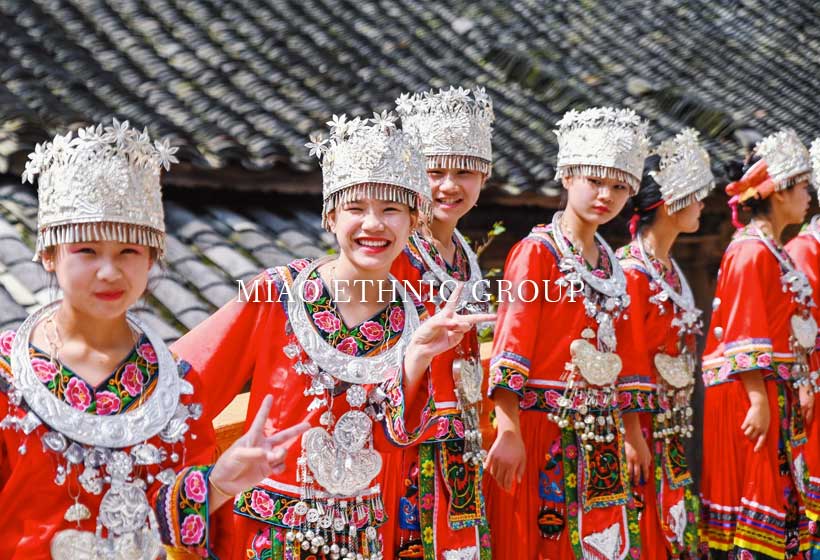 Miao people
: The Miao people, living in eastern and southern Yunnan, may not have a written language, but their rich history and culture are widely admired. Renowned for their intricate embroidery and batik, the Miao believe that silver jewelry holds protective powers. Women often wear elaborate silver pieces to pray for safety and good health.
The Zhuang people: mainly live in Wenshan Zhuang and Miao Autonomous Prefecture, which is the second-largest settlement area of the Zhuang people in China. They are known for their distinctive bronze drum culture, traditional arts such as Zhuang opera and paper horse dance, and unique stilted wooden houses. Many local communities still preserve traditional customs and intangible cultural heritage, offering visitors a glimpse into Zhuang traditions.
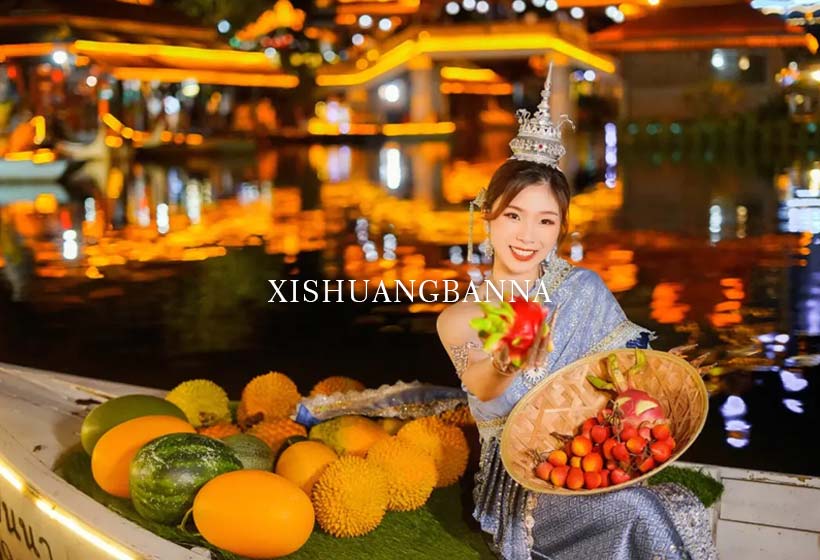 Dai people
The Dai people: mainly live in Xishuangbanna Dai Autonomous Prefecture, Dehong Dai and Jingpo Autonomous Prefecture, as well as areas such as Gengma and Menglian. They have their own language, script, music, dance, and traditional customs. Famous cultural expressions include the Peacock Dance, White Elephant Dance, and Golden Deer Dance, while festivals such as the Water Splashing Festival showcase their vibrant traditions and close connection with nature.
Local Dialect
Yunnan is home to a variety of Chinese dialects, most of which belong to the Southwestern Mandarin group. Influenced by historical migration, local ethnic languages, and neighboring dialects, these varieties have developed distinctive pronunciation, vocabulary, and expressions. Yunnan Mandarin also has historical links to Nanjing Mandarin spoken during the Ming dynasty.
Festival of Ethnic
Jitian: (Feb)The Jitian, or "Heaven Worship Ceremony," is one of the most significant rituals in Naxi Dongba religion and is also the largest traditional festival among the Naxi people. It is held during the first month of the lunar calendar.
Bangbang Festival: (Jan 15th) This is an important cultural activity of the Nakhi people. On the fifteenth day of the first lunar month, in addition to customs similar to the Han people, such as eating yuanxiao (glutinous rice dumplings) and viewing lanterns, there are also activities with distinct local ethnic characteristics.
Sanduo Festival: (Feb 8th) On the eighth day of the second lunar month, a festival with over 1,200 years of history is celebrated, which has been listed as a national intangible cultural heritage. It is one of the most important traditional festivals for the Naxi people. They dress in their finest attire and participate in activities such as traditional dancing, showcasing the ancient and rich Nakhi culture.
Torch Festival: (June 24th) It is celebrated on the 24th or 25th day of the sixth month of the Yi calendar, the Yi people celebrate the festival to eradicate insect swarms and celebrate a good harvest, they wear festival suits, play Yu-kin musical instruments and the great three-stringed instrument to participate in Torch Festival.
Spring Festival: (Feb 10th) During the Spring Festival, known in Lijiang as "You Ben Ji Zheng" or "Ku Shi," which means New Year, the Nakhi people celebrate with various customs. They place camellia flowers in vases, put up spring couplets and door gods, and prepare a variety of dishes, fruits, and offerings. They also worship the "Kitchen God" and welcome their ancestor’s "home" to celebrate the New Year.
Miao Huashan Festival: Held from the 3rd to the 7th day of the first month of the lunar calendar, the Huashan Festival is one of the most important celebrations for the Miao people. Popular in areas such as Luquan and Fumin near Kunming, the festival features singing competitions, traditional dances, and bullfighting. It serves as a key social occasion for Miao youth to meet, mingle, and celebrate their cultural heritage.
Dai Water Splashing Festival (mid-April), also known as the "Bathing Buddha Festival," is called "Sangkran Bimai" in the Dai language, meaning "New Year." It is also one of the first events to become a national intangible cultural heritage in China. People start splashing water on each other as a way to offer blessings, symbolically washing away illness and misfortune, while welcoming a future filled with happiness and prosperity.
Hani "Gatangpa" Festival (January 2-4) is a time for people to remember their ancestors and welcome the new year. During the festival, people pound sticky rice cakes, offer sacrifices to household gods, and host banquets.
Jino "Wumao" (New Year Festival) takes place from February 6-8. During this time, they beat drums, hold ceremonies such as cattle sacrifice, farming preparations, and ironworking rituals, and pass down skills from master blacksmiths to apprentices.
"Open Door Festival" (celebrated on October 15 in the Gregorian calendar) is a significant event for the Dai people, where they gather at temples to perform grand ceremonies known as "Danfo," offering food, flowers, and money to Buddha statues and monks. The festival symbolizes the end of the three-month rainy season and marks the lifting of restrictions on marriage imposed during the "Closed Door Festival." From this day, young men and women are free to court or get married.
Diet Style and Culinary Tastes
Yunnan’s unique natural environment and diverse ethnic cultures have created a rich variety of food flavors. Yunnan cuisine, also known as Dian cuisine, blends the culinary traditions of local ethnic groups. It makes full use of wild mushrooms, fresh vegetables, aromatic herbs and other abundant ingredients, forming a distinctive taste profile that is sour, spicy, fresh and fragrant.
Must-try classics include Crossing-the-Bridge Rice Noodles, Yunnan’s most iconic dish with a legendary story. Steam Pot Chicken is simmered purely by steam in a special clay pot for clear, nourishing broth. Wild mushroom hot pot highlights the forest’s seasonal treasures. Xuanwei Ham, aged cured ham, carries a deep aromatic flavour. We also have Dai-style dishes like lemongrass grilled fish, and stir-fried Erkuai rice cakes, full of local rustic charm.
Cultural Heritage
Yunnan is rich in cultural and natural heritage, with six UNESCO World Heritage properties covering ancient towns, terraced rice fields, ancient tea forests, and remarkable natural landscapes. The province is also home to numerous national-level intangible cultural heritage traditions, including Yunnan opera, Bai tie-dyeing, Jianshui purple pottery, the Dai Water Splashing Festival, Naxi Dongba painting, and Naxi ancient music. These traditions reflect Yunnan’s cultural diversity through traditional craftsmanship, music, dance, and folk customs.Lijiang Old Town: Yunnan’s first UNESCO World Heritage Site, Lijiang Old Town has a history of more than 800 years. Its traditional architecture blends harmoniously with the surrounding natural landscape.
Pu’er Jingmai Mountain Ancient Tea Forests: The world’s first UNESCO World Heritage property centered on tea cultivation; this site preserves ancient tea forests and traditional villages that reflect centuries of tea-growing culture.
Honghe Hani Rice Terraces: Recognized for their remarkable agricultural heritage, these vast terraces are a striking example of how generations of Hani people have shaped the landscape through traditional farming practices.
Yunnan Stone Forest: A spectacular karst landscape featuring clusters of limestone pillars and rock formations in a variety of unusual shapes.
Three Parallel Rivers of Yunnan Protected Areas: The Jinsha, Lancang, and Nu rivers flow in parallel through deep valleys and rugged mountains, creating one of the world’s most distinctive river landscapes.
Chengjiang Fossil Site: This important paleontological site preserves fossils of early Cambrian life, offering valuable evidence for understanding the early evolution of animal life on Earth.
Customize Your Unique Yunnan Tour

If you are interested in one of the Yunnan itineraries mentioned above, please contact us, and we will be happy to customize it and provide a quote tailored to your preferences.
Alternatively, if you would like to customize your Yunnan Tour, please visit our Yunnan Tour Customized Center. We assure you that you will receive a reply within 24 working hours.
Informative Articles for Your Yunnan Trip
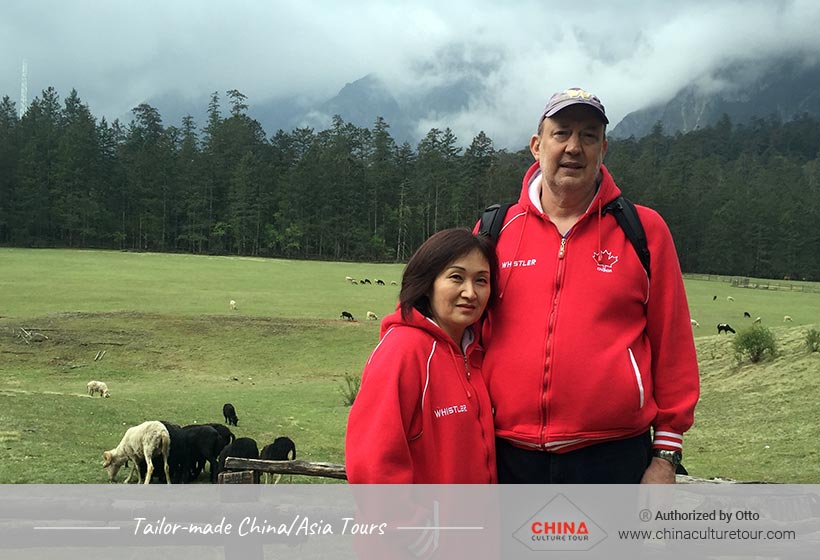 Pudacuo National Forest Park, Shangri La
- Travel Guide: attractions, seasons, hotels, food, itineraries, etc.
- Top attractions: well-selected top attractions in Yunnan
- Top destinations: places to visit in Yunnan
- Travel itineraries: best itineraries for your reference
- Weather: the best time and seasons to visit Yunnan
- Cultural immersions: Yunan cultural immersions
- Abundant activities:hands-on activities to spotlight your trip
- Unique perspective: top different things to do
- Local food: what to eat while traveling in Yunnan
- Luxury hotels: where to stay in Yunnan
- Yunnan Tours: tailor-made Yunnan Tours for your reference

GREAT FAMILY CHINA TOUR
JULY 2024 We wanted to thank Grace at China Culture tour for organizing a great tour of China. We enjoyed our Beijing - Xian-Chengdu -Guilin -Yangshuo - Shanghai trip. Our local guides Bruce in Beijing, Susan in Xian, Jane in Chengdu, Mike in Guilin and Mary in Shanghai took care of us…read more details »
Teng Han L from SINGAPORE
Ready to Create a Unique Dream Travel?