

Short Introduction to Yinchuan Local Culture: History, Nation, Diet, Clothing, etc.
Yinchuan, the capital of the Ningxia Hui Autonomous Region, is a prefecture-level city historically known as Xingqing Prefecture and affectionately called the “Phoenix City.” According to legend, a phoenix once flew from the Helan Mountains, saw the Yellow River winding through this land and its scenery as graceful as that of southern China, and chose to remain, transforming itself into the city of Yinchuan.
As a frontier ancient city with over two thousand years of history, Yinchuan preserves the rich legacy of Yellow River civilization and the mysterious culture of the Western Xia Dynasty. The city’s diverse tourism resources include the Suyukou National Forest Park in the Helan Mountains and the Helan Mountain Rock Paintings, which together showcase its unique natural and cultural heritage.
Recognized as one of China’s Excellent Tourism Cities and a National Garden City, Yinchuan is also known for its strong Western Region influences. The Hui community’s deep-rooted Islamic traditions, distinctive customs, and emphasis on hospitality add vibrant cultural layers to the city, creating a living cultural landscape shaped by centuries of ethnic exchange.
Brief History
Yinchuan, an ancient city on the banks of the Yellow River, boasts over two thousand years of history and was historically the capital of the Western Xia Dynasty. Today, it is recognized as a National Historical and Cultural City.
In 221 BCE, after Qin Shi Huang unified China, the Yinchuan area belonged to Beidi Commandery. During the fifth year of Emperor Yuan’s reign in the Han Dynasty (112 BCE), Beidian Agricultural City, also known as Lücheng, was established—marking the beginnings of Yinchuan as a settled city.
In 677 CE, during the Tang Dynasty’s Yifeng period, a new city was built west of the old settlement, located in what is now Xingqing District.
In 1038, Li Yuanhao founded the Western Xia Dynasty and established Xingqing Fu as its capital.
By 1288, under the Yuan Dynasty, the region was reorganized as Ningxia Prefecture under the Zhongshu Sheng, giving the area its current name.
During the Ming Dynasty, Ningxia Town was set up, governing seven military posts with combined civil and military administration, and was considered one of the “Nine Border Strongholds.”
In the Qing Dynasty, it was restructured as Ningxia Prefecture, overseeing several counties. Modern Yinchuan was officially established as a city on April 18, 1947.
Today, Yinchuan is a vibrant regional center where ancient history meets contemporary culture, offering visitors a unique blend of historical sites, Islamic architecture, and scenic landscapes along the Yellow River.
Ethnic Culture
Yinchuan is a historic immigrant city and a multiethnic urban center. Han Chinese make up about 75.05 percent of the population, while the Hui ethnic group accounts for approximately 23.35 percent. As the administrative capital of Ningxia, Yinchuan is also one of China’s most important cities with a concentrated Hui population, giving it a distinctive blend of cultures, traditions, and lifestyles.
Ethnic
With the migration of peoples from the Western Regions, Islam gradually took root in Yinchuan and gave rise to the rich Hui culture seen today. The Great Mosque of Yinchuan stands as a powerful symbol of the Hui people’s faith and the flourishing of Islamic culture in the city. Deeply shaped by Islamic traditions, the Hui community is known for its halal cuisine, vibrant markets, distinctive dress, and religious festivals. This seamless blend of Chinese and Islamic heritage has formed a unique cultural identity that defines Yinchuan’s character and daily life.
Ethnic Clothing
The traditional clothing of the Hui people in Yinchuan reflects both cultural identity and religious practice. Men often wear white or black caps paired with a white shirt and a blue vest. Women traditionally wear embroidered, long-front jackets. Religious practitioners and devout believers don long robes or tunics during prayers or religious ceremonies. According to religious customs, women cover their heads with a veil, with older women usually choosing black or white, middle-aged women often wearing blue, and young women preferring green.
Local Dialect
The local dialect of Yinchuan belongs to the “Lanyin Mandarin – Yinwu Subgroup,” a branch of Northern Chinese dialects. While the Hui people primarily speak this Chinese dialect, their language is influenced by religion, and in certain contexts, Arabic vocabulary is used.
Faith and worship
Yinchuan has a long and diverse religious history, with Buddhism, Islam, Taoism, Protestant Christianity, and Catholicism all practiced in the city.
Traditional Festival and Special Custom
Liaogan Festival (the 23rd day of the first lunar month): features a unique ritual where locals light bundles of straw in their courtyards. They step or jump over the fire when the flames reach their peak. This ritual is believed to burn away illness, misfortune, and bad luck, allowing people to usher in the new year with prayers for health, good fortune, peace, and a bountiful harvest.
Eid al-Fitr (Kaimai Festival, Islamic calendar: 1st day of Shawwal): One of the most important festivals for the Hui people, Eid al-Fitr marks the end of Ramadan. The day begins with a solemn congregational prayer at mosques, followed by visits to family and friends. People exchange traditional foods such as yóuxiāng (fried pastries), wear ethnic attire, and share festive meals, expressing gratitude, joy, and blessings within the community.
Eid al-Adha (Gurban Festival, Islamic calendar: 10th day of Dhu al-Hijjah): Eid al-Adha commemorates devotion and sacrifice. Families perform ritual animal sacrifice, with the meat shared among relatives, neighbors, and those in need. The festival is marked by communal prayers, charitable acts, and social gatherings, as Hui people dress in traditional clothing and pay visits to one another, strengthening community bonds and cultural traditions.
Diet Style and Culinary Tastes
Yinchuan’s cuisine reflects the combined culinary traditions of both the Han and Hui communities. Han-style food is rooted in Northwestern Chinese cooking, while Hui culinary culture has deeply influenced local flavors. The city is especially known for its love of gaiwan tea, as well as dishes centered on lamb, wheat-based noodles, and halal specialties, offering a rich blend of regional character and ethnic heritage.
Cultural Heritage
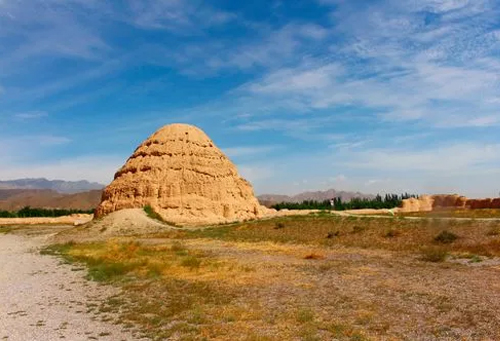
Yinchuan, the capital of Ningxia Hui Autonomous Region, is a treasure trove of cultural heritage that reflects its unique history at the crossroads of Chinese, Islamic, and Silk Road civilizations. The city and its surroundings are home to the Western Xia Imperial Tombs, ancient Helan Mountain rock carvings, and the historic Drum Tower, alongside preserved temples, mosques, and traditional Hui architecture.
Yinchuan also preserves intangible cultural heritage such as Helan Inkstone carving, Ningxia paper-cutting, Hua’er folk songs (traditional mountain singing), and Hui-style culinary traditions, offering visitors a rich blend of tangible and intangible cultural experiences that reveal the city’s artistic, religious, and historical depth.
Customize Your Unique Yinchuan Tour

If you are interested in the Yinchuan itineraries mentioned above, please contact us, and we will be happy to customize it and provide a quote tailored to your preferences.
Alternatively, if you would like to customize your Yinchuan Tour, please visit our Ningxia Tour Customized Center. We assure you that you will receive a reply within 24 working hours.
Informative Articles for Your Yinchuan Trip
 Yinchuan
- Travel Guide: attractions, weather, hotels, food, etc.
- Weather: best time and seasons to visit Yinchuan
- Top attractions: well-selected top attractions in Yinchuan
- Travel itineraries: itineraries for your reference
- Local culture: brief history, folk culture, festivals, etc.
- Top destinations: best places to visit in Yinchuan
- Abundant activities: Yinchuan cultural immersions
- Unique perspective: top interesting things to do
- Local food: what to eat while traveling in Yinchuan
- Luxury hotels: accommodation to stay in Yinchuan
- Yinchuan Tours: customized tours for your reference

GREAT FAMILY CHINA TOUR
JULY 2024 We wanted to thank Grace at China Culture tour for organizing a great tour of China. We enjoyed our Beijing - Xian-Chengdu -Guilin -Yangshuo - Shanghai trip. Our local guides Bruce in Beijing, Susan in Xian, Jane in Chengdu, Mike in Guilin and Mary in Shanghai took care of us…read more details »
Teng Han L from SINGAPORE
Ready to Create a Unique Dream Travel?