

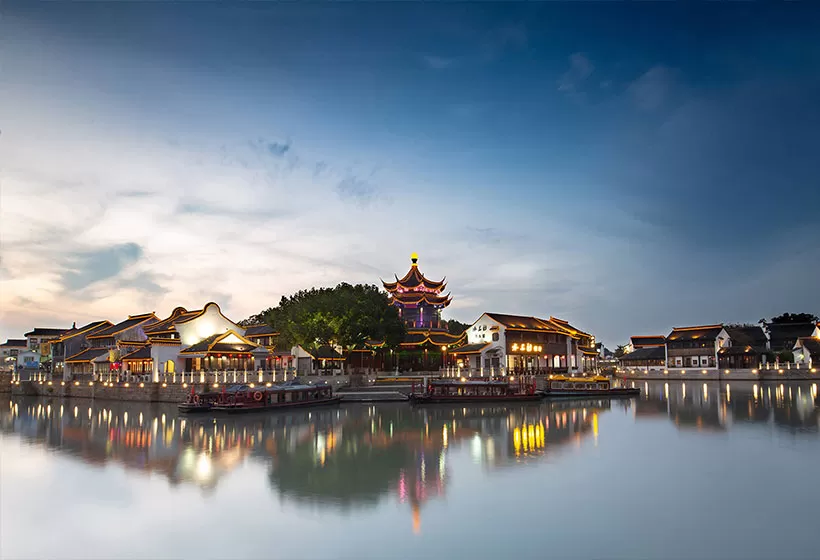
Suzhou travel guide: attractions, weather, food, hotels, local culture, itinerary, etc.
Suzhou, a millennia-old city affectionately known as “Gusu,” is gently embraced by its canals and classical gardens. It is a major city in Jiangsu Province, located in the southeast of the province, bordering Shanghai to the east and the Yangtze River to the north. Covering a total area of about 8,657 square kilometers, By the end of 2024, Suzhou had a permanent population of 12.987 million.
As the Chinese saying states, "In heaven there is paradise; on earth are Suzhou and Hangzhou ." Chinese people and foreigners alike hear of Suzhou from this perspective. In ancient times, Suzhou was a center of economic prosperity and cultural abundance.
Suzhou's appeal is not its skyscrapers, expressways, or supermarkets. These sights can be seen elsewhere, including its neighboring city, Shanghai. Those who visit Suzhou marvel at its small bridges, murmuring brooks, classic gardens, and water towns. While experiencing its prosperity, visitors also witness the exquisiteness and elegance of Suzhou.
Culture of Suzhou
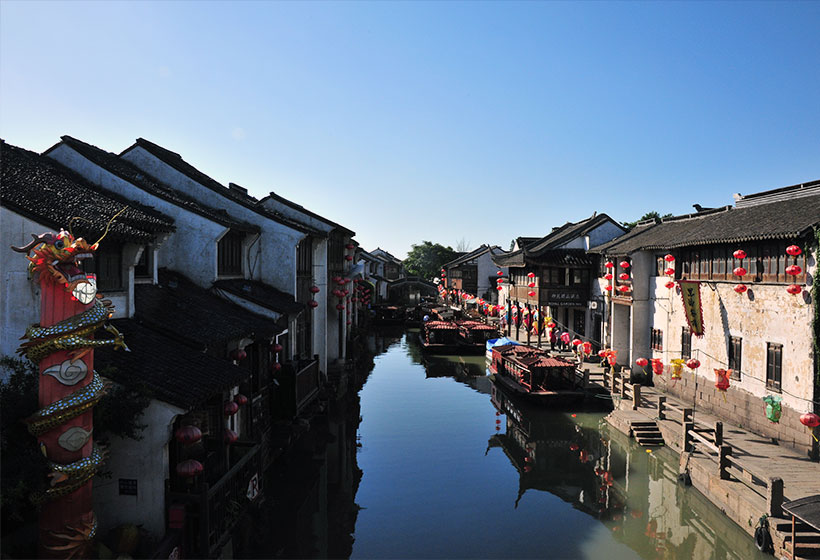 Water Ancient Town
Suzhou is a renowned historic and cultural city in China and the birthplace of Wu culture. Known in ancient times as Gusu, it served as the capital of several regimes, including the State of Wu during the Spring and Autumn Period, Eastern Wu in the early Three Kingdoms era, and the short-lived Zhou dynasty during the Yuan dynasty.
Suzhou is also a culturally rich city with over 2,500 years of history. It is the only city in China that has never changed its original location. The city is renowned for its exquisite traditional craftsmanship, such as Suzhou embroidery, kesi weaving, and jade carving, as well as for its rich cultural heritage including Kunqu Opera, classical gardens, and silk. These are not only treasures of Suzhou’s culture but also shining examples of Chinese artistic brilliance and ingenuity. With its elegant charm and profound heritage, Suzhou continues to captivate the attention of the world. It is also a city where all 56 of China’s ethnic groups are represented, reflecting its inclusiveness and cultural diversity.
Must-visit Attractions, what to visit
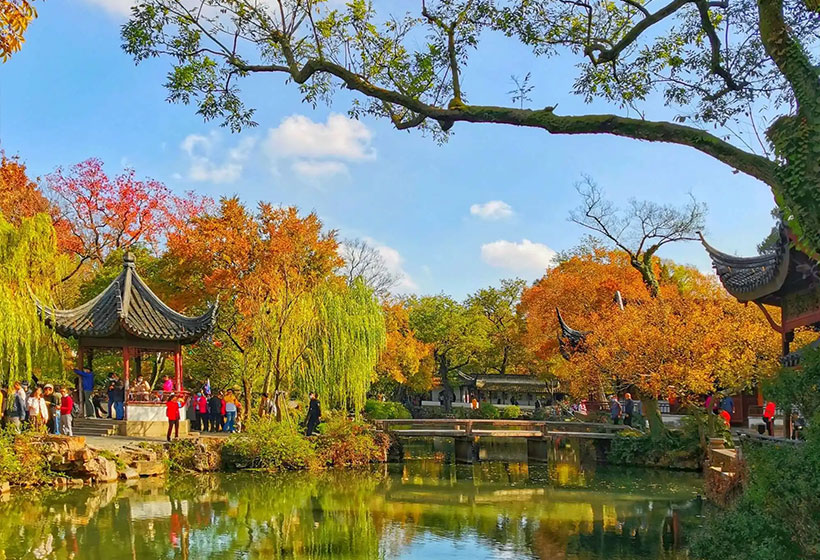 Humble Administrator’s Garden
Suzhou is a picturesque city renowned for its classical gardens, ancient canals, rich cultural heritage, and a wealth of historical landmarks, including 59 National A-level scenic areas. Highlights include the UNESCO-listed Humble Administrator’s Garden and Lingering Garden, celebrated for their exquisite design and artistry. The historic Pingjiang Road and Shantang Street offer a glimpse into the city’s centuries-old charm, with canals, stone bridges, and traditional residences. Notable water towns like Zhouzhuang, Tongli, and Luzhi preserve ancient waterways, Ming and Qing architecture, and traditional crafts. Jinji Lake showcases the city’s modern side, while Tiger Hill is famed for its leaning Yunyan Pagoda and rich history. Together, these must-visit attractions make Suzhou a perfect blend of natural beauty, cultural depth, and living history.
Classic Gardens
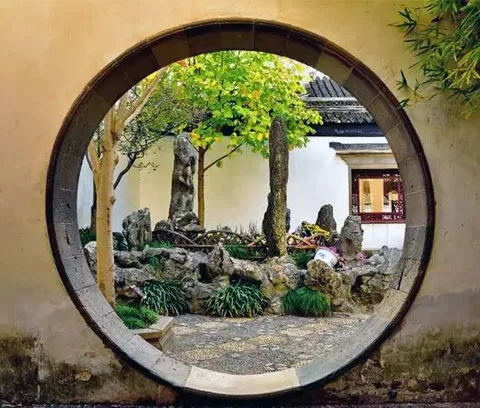
In China, gardens fall under two categories: one is the imperial garden, such as the Summer Palace and the Garden of Perfect Splendor in Beijing, and the Imperial Summer Resort in Chengde, all of which are magnificent and imposing. The other is the private garden, like those found in Suzhou. A Suzhou Garden represents the original idea of an "urban scenery." It is a microcosm of the world in one corner of the bustling city, composed of the basic elements of water, rocks, plants, and buildings, arranged in such a way as to reflect the garden's sequential beauty including, the passage of time, the contrast between morning and evening, and succeeding seasons.
The classic gardens of Suzhou are a precious heritage within Chinese culture. More than 60 gardens are well preserved, and over a dozen are open to the general public, including the Humble Administrator's Garden, the Lingering Garden, the Master-of-Nets Garden, the Lion Forest Garden, and the Mountain Villa with Embracing Beauty. Top attractions in Suzhou >>
In December 1997, Suzhou's classic gardens were named World Heritage sites by UNESCO.
Local Food and Snacks
Jiangsu cuisine has great variety. After thousands of years of development, Suzhou foods can be divided into twelve categories, i.e. Jiangsu style dishes, Jiangsu style braised food, Jiangsu style pastry, Jiangsu style cakes, Jiangsu style candy, Jiangsu style confiture, Suzhou snacks and Suzhou rice-cake, among others.
Famous Suzhou dishes include, Squirrel-shaped mandarin fish (Songshu Guiyu) and Ao Zao Noodles in spring, Pan-fried Pork Buns and Sanxia Noodles in summer, Yangcheng Lake Hairy Crab in autumn, Sauce-Braised Pork in winter, etc.
Weather, when is best time and season to visit
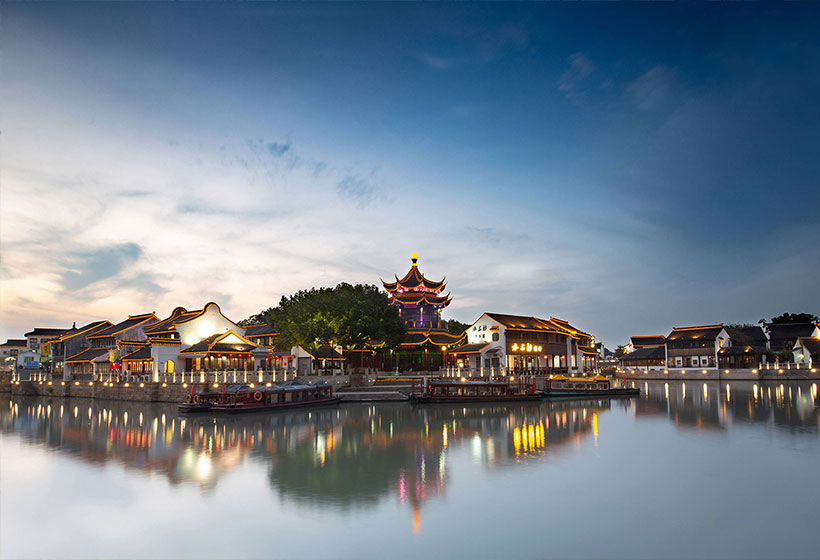 Water Ancient Town
The best time to visit Suzhou, the ancient city renowned for its stunning classical gardens, intricate waterways, and rich cultural heritage, is between April and October when the weather is pleasant and the scenery is at its most vibrant, with flowers in full bloom and the natural scenery at its peak, making it an ideal destination for sightseeing and exploring the city's many attractions.
Top destinations, where to visit
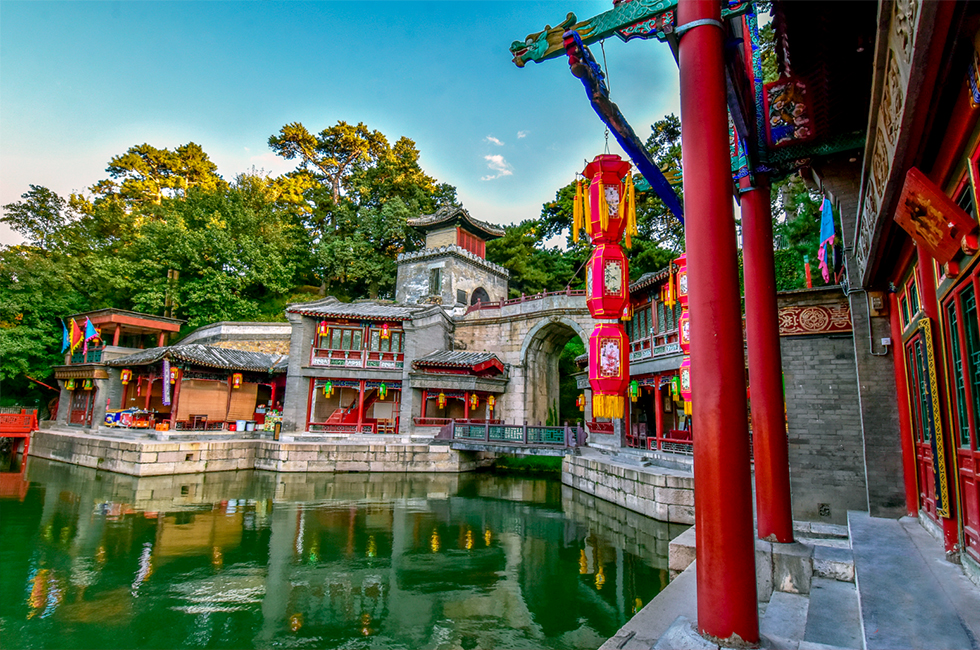 Water Ancient Town
Suzhou, often called a "heaven on earth," blends classical elegance with rich cultural heritage. Famous for its UNESCO-listed gardens, most are in Gusu District, the city's historic core. Wuzhong District offers an authentic taste of Jiangnan culture, while Wujiang District and Kunshan are home to renowned water towns. From ancient alleys to serene canals and graceful gardens, Suzhou captures the timeless beauty of traditional China.
Best Things to do in Suzhou
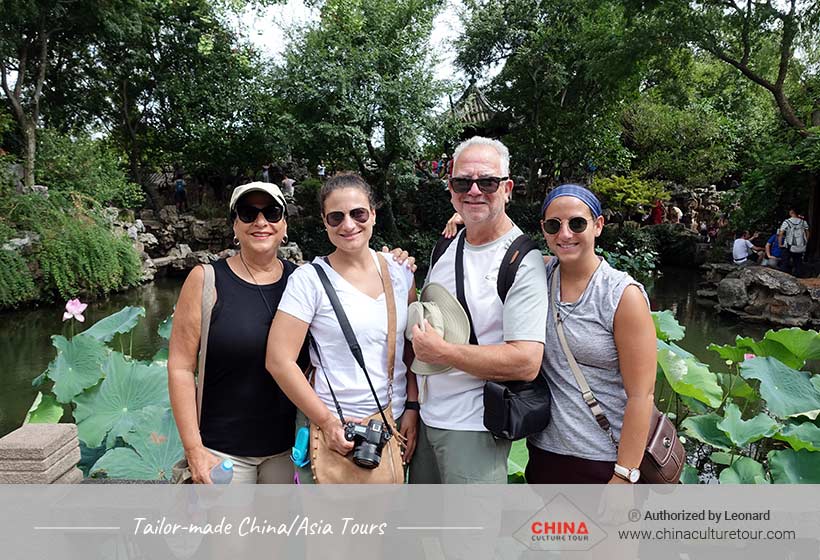 Humble Administrator’s Garden
Suzhou, often hailed as the “Venice of the East,” offers a rich blend of history, culture, and natural beauty. Visitors can explore its classical gardens, such as the Humble Administrator’s Garden and the Lingering Garden, which showcase the elegance of traditional Chinese landscaping. Stroll through the ancient water towns of Tongli or Zhouzhuang, where narrow alleys and stone bridges tell stories of centuries past. Discover Suzhou’s vibrant silk heritage at the Silk Museum, or enjoy a relaxing boat ride along the canals that wind through the old city. Whether you're interested in architecture, art, or simply soaking in the serene charm of Jiangnan, Suzhou promises a memorable experience.
Cultural hands-on activities that can spotlight your trip
 Embroidery with Silk
In Suzhou, visitors can immerse themselves in the rich cultural heritage of the city through various hands-on activities such as traditional silk-weaving, calligraphy and brush painting workshops, tea ceremonies, and visiting ancient gardens and temples to learn about the history and architecture of the city.
Luxury Hotel in Suzhou
Suzhou offers a diverse range of hotels to suit every traveler’s needs, from luxury international brands and elegant boutique hotels to charming accommodations set within traditional gardens or restored heritage buildings. So, the top recommendation is to stay in hotels either in the city center—Gusu District—near the classical gardens, which allows you to fully immerse yourself in the charm of the “Venice of the East,” or in the Jinji Lake area in the Industrial Park, which boasts many luxury hotels offering stunning lakeside views, modern facilities, and convenient access to shopping, dining, and entertainment.
Travel itineraries, how to plan a trip
How to Plan an Itinerary in Suzhou
Visiting the top classic attractions in Suzhou takes about 2 full days. Adding arrival and departure time, you'll need approximately 3-4 days.
Here some suggestion for 4 days sightseeing in Suzhou
- Day 1: Arrival in Suzhou, wander along Shantang Street, and take a leisurely cruise on the Grand Canal.
- Day 2: Visit the UNESCO-listed Humble Administrator’s Garden, explore the Suzhou Museum designed by I.M. Pei, enjoy a special rickshaw tour around the city, and take a leisurely stroll along the historic Pingjiang Road.
- Day 3: Take a day trip to Zhouzhuang Water Town, enjoy a black-awning boat ride, admire the Twin Bridges, and explore traditional residences such as Shen’s House and Zhang’s House.
- Day 4: Explore Lion Grove Garden, take a leisurely stroll along Shantang Road, sip a cup of tea, and enjoy a traditional Suzhou performance of pingtan in a cozy teahouse.
- Finish your 4-day itinerary with a heart full of unforgettable memories and departure in the evening.
- View the travel itineraries for Suzhou >>
- All the itinerary are flexible. Just contact us, please. We would be honored to customize a perfect, personalized itinerary specifically for you.
Explore Suzhou with a Local Expert
Suzhou offers world-classic gardens and water towns for travelers to enjoy, travel with our Suzhou local experts and you will have an unforgettable experience! View Suzhou tours and create your trip!
Customize Your Garden City Suzhou Tour

If you are interested in the Suzhou itineraries mentioned above, please contact us, and we will be happy to customize it and provide a quote tailored to your preferences.
Alternatively, if you would like to customize your Suzhou Tour, please visit our Suzhou Tour Customized Center. We assure you that you will receive a reply within 24 working hours.
Informative Articles for Your Suzhou Trip
Suzhou Water Town- Travel Guide: attractions, weather, hotels, food, etc.
- Weather: best time and seasons to visit Suzhou
- Top attractions: sightseeings to watch in Suzhou
- Local culture: brief history, folk culture, festivals, etc.
- Top destinations: best places to visit in Suzhou
- Travel itineraries: itineraries for your reference
- Abundant activities: Suzhou cultural immersions
- Unique perspective: top interesting things to do
- Local food: what to eat while traveling in Suzhou
- Luxury hotels: accommodation to stay in Suzhou
- Suzhou Tours: customized tours for your reference

GREAT FAMILY CHINA TOUR
JULY 2024 We wanted to thank Grace at China Culture tour for organizing a great tour of China. We enjoyed our Beijing - Xian-Chengdu -Guilin -Yangshuo - Shanghai trip. Our local guides Bruce in Beijing, Susan in Xian, Jane in Chengdu, Mike in Guilin and Mary in Shanghai took care of us…read more details »
Teng Han L from SINGAPORE
Ready to Create a Unique Dream Travel?